


What's Happening?
A recent study published in Frontiers in Astronomy and Space Sciences has revealed that solar activity significantly influences the rate at which space debris descends from low Earth orbit. The research tracked 17 pieces of space debris over 36 years,
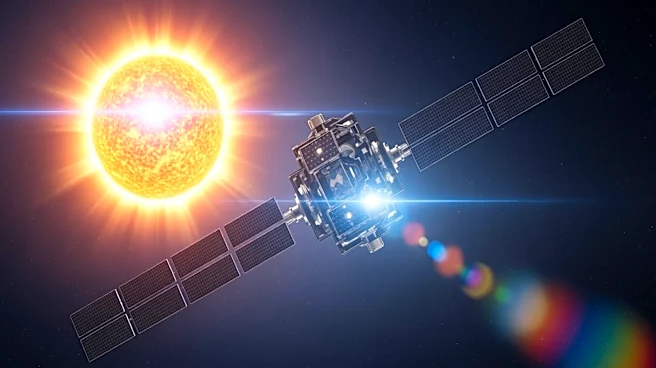
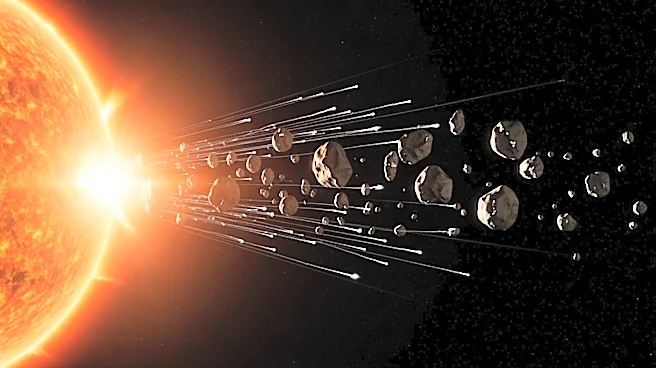
covering three complete solar cycles. It found that as the Sun approaches its solar maximum, the debris loses altitude more rapidly. This acceleration occurs when solar activity reaches about two-thirds of its peak. The study highlights that during periods of high solar activity, the Sun emits intensified ultraviolet radiation and charged particles, which heat the thermosphere and increase atmospheric drag on orbiting objects. This increased drag causes the debris to fall faster, posing a greater risk of collision.
Why It's Important?
The findings of this study are crucial for the management of space debris, which is a growing concern due to the increasing number of defunct satellites and collision fragments in orbit. Understanding how solar activity affects debris descent can help operators prioritize which objects pose the greatest collision risk. This knowledge is vital for planning sustainable space operations and mitigating the potential for catastrophic collisions, known as the Kessler Syndrome. The study provides valuable data for satellite operators, who must adjust orbits more frequently during solar maximum, impacting mission costs and satellite longevity.
What's Next?
As solar activity continues to influence space debris behavior, satellite operators and space agencies will need to incorporate these findings into their operational strategies. This may involve developing more precise tracking systems and enhancing debris removal technologies. The study's insights could also inform future policies on satellite design and end-of-life disposal to minimize space debris. Additionally, international collaboration may be necessary to address the shared challenge of space debris management effectively.