


What's Happening?
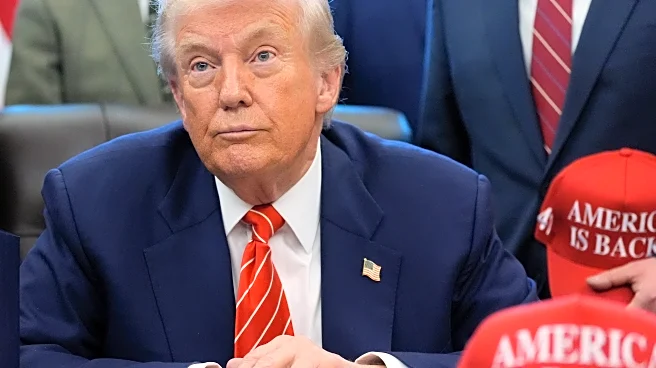
Former U.S. Ambassador to Denmark, Rufus Gifford, has expressed criticism over President Trump's ongoing threats to exert control over Greenland. In an interview with ABC News' Linsey Davis, Gifford highlighted the emotional impact these threats have
had on the Danish people, describing their reaction as 'heartbroken.' The issue stems from President Trump's interest in purchasing Greenland, a move that has been met with resistance and concern from Denmark, which governs the autonomous territory. Gifford's comments underscore the diplomatic tensions that have arisen from this geopolitical interest, which many see as a strategic move by the U.S. to expand its influence in the Arctic region.
Why It's Important?
The controversy surrounding the U.S. interest in Greenland is significant due to its implications for international relations and geopolitical strategy. Greenland's strategic location and natural resources make it a valuable asset, particularly in the context of Arctic exploration and military positioning. The U.S. threat to control Greenland has strained relations with Denmark, a key NATO ally, potentially impacting broader diplomatic and military cooperation. Additionally, this situation highlights the complexities of territorial sovereignty and the challenges of balancing national interests with international diplomacy. The Danish reaction, as described by Gifford, reflects broader concerns about U.S. foreign policy approaches under President Trump, which have often been characterized by unilateral actions and contentious rhetoric.
What's Next?
Moving forward, the U.S. and Denmark may need to engage in diplomatic discussions to address the tensions caused by the Greenland issue. It is likely that Denmark will continue to assert its sovereignty over Greenland, while the U.S. may explore alternative strategies to enhance its presence in the Arctic. The situation could also prompt discussions within NATO regarding the implications of such territorial interests on alliance dynamics. Additionally, the international community will be watching closely to see how this issue is resolved, as it could set precedents for future territorial negotiations and geopolitical strategies.
Beyond the Headlines
Beyond the immediate diplomatic tensions, the U.S. interest in Greenland raises questions about the ethical considerations of territorial acquisition in the modern era. The situation also highlights the potential environmental impacts of increased geopolitical interest in the Arctic, a region already vulnerable to climate change. As nations vie for influence in this strategically important area, there is a risk of exacerbating environmental degradation and disrupting indigenous communities. These broader implications underscore the need for careful consideration of the long-term consequences of geopolitical strategies in sensitive regions.