







What's Happening?
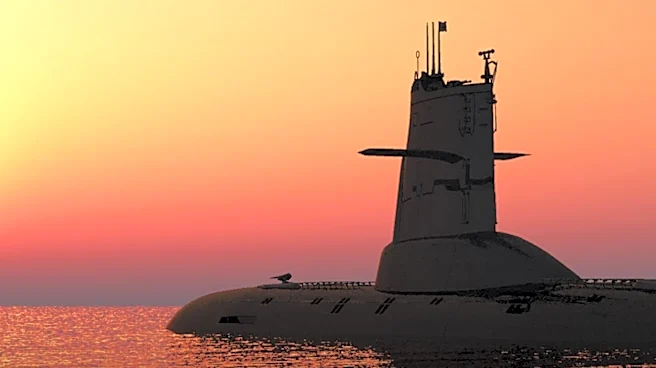
The Russian Navy's K-222, known for its titanium hull and high speed, remains unmatched by the U.S. Navy in terms of speed and technological innovation. The submarine, capable of reaching speeds of 44.7 knots, was designed during the Cold War to counter
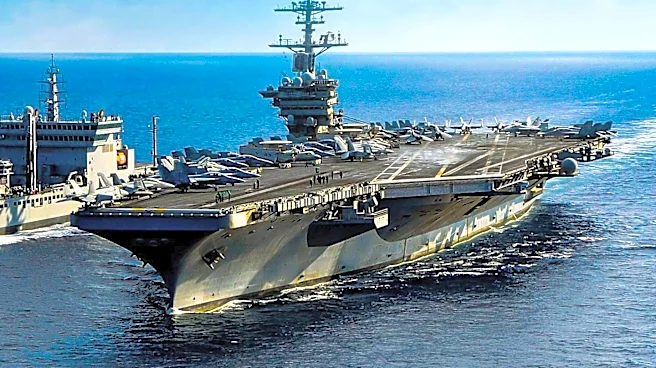
U.S. aircraft carriers with its 10 anti-ship missiles. Despite its impressive capabilities, the K-222 was plagued by high costs, construction challenges, and operational limitations, leading to its status as a one-of-a-kind vessel. The use of titanium provided advantages in strength and corrosion resistance but also required specialized manufacturing processes, making it prohibitively expensive.
Why It's Important?
The K-222 represents a significant technological achievement in submarine design, showcasing the potential of titanium in naval engineering. However, its high cost and operational challenges highlight the trade-offs between advanced technology and practical deployment. The U.S. Navy's decision to focus on quieter, more maintainable steel submarines reflects a strategic choice prioritizing stealth and sustainability over speed. This decision has influenced naval strategies and submarine development, emphasizing the importance of balancing innovation with operational feasibility.
Beyond the Headlines
The K-222's development underscores the broader Cold War arms race, where technological advancements were often pursued at great expense. The submarine's legacy continues to influence modern naval engineering, particularly in the use of advanced materials and propulsion systems. The challenges faced in its construction and operation serve as a cautionary tale about the complexities of integrating cutting-edge technology into military hardware.