

What's Happening?
A recent case in France has highlighted the challenges forensic scientists face when trying to distinguish between identical twins using DNA testing. The case involved twin brothers whose DNA was found on a gun, but conventional DNA testing methods could
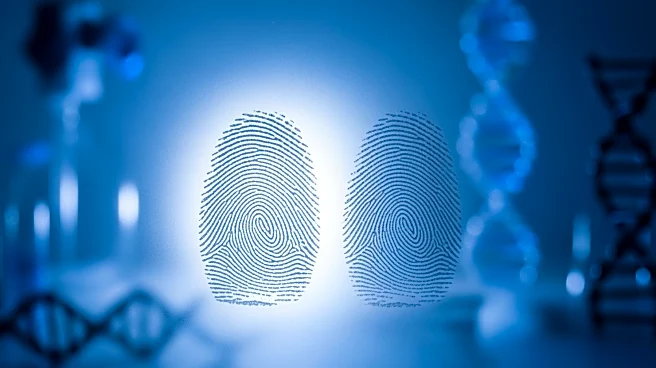
not determine which brother it belonged to. Identical twins, or monozygotic twins, share the same DNA because they originate from a single fertilized egg that splits into two. Typically, forensic scientists use short tandem repeat (STR) analysis to identify individuals from DNA samples. However, this method is ineffective for identical twins as they have identical STR regions. Researchers have explored whole-genome sequencing and mitochondrial DNA (mtDNA) analysis as potential solutions. Whole-genome sequencing can identify rare mutations that occur after the egg splits, while mtDNA, which mutates more frequently than nuclear DNA, may offer differences between twins. Despite these advancements, the use of mtDNA in twin cases has not been widely adopted in U.S. courts.
Why It's Important?
The inability to distinguish between identical twins using conventional DNA testing poses significant challenges for the legal system, particularly in criminal cases where DNA evidence is crucial. This limitation can hinder the ability to accurately identify perpetrators and deliver justice. The exploration of whole-genome sequencing and mtDNA analysis represents a potential breakthrough in forensic science, offering new methods to differentiate between twins. If these techniques become more widely accepted and implemented, they could enhance the accuracy of forensic investigations and strengthen the reliability of DNA evidence in court. This development could also prompt changes in legal standards and procedures regarding the admissibility of DNA evidence, impacting how cases involving identical twins are prosecuted and defended.
What's Next?
The forensic community may continue to research and refine these advanced DNA testing methods to improve their accuracy and reliability. Legal systems might also consider updating guidelines and standards for the use of DNA evidence in cases involving identical twins. As these techniques become more validated, they could be integrated into standard forensic practices, potentially leading to new protocols for handling DNA evidence in complex cases. Additionally, there may be discussions and debates within the legal and scientific communities about the ethical implications and privacy concerns associated with more invasive DNA testing methods.