





What's Happening?
Jamaica is experiencing a 'justice drought,' characterized by a lack of tangible justice for its citizens, particularly the vulnerable. This drought is not due to a lack of discussion but rather a failure to translate theoretical justice into practical
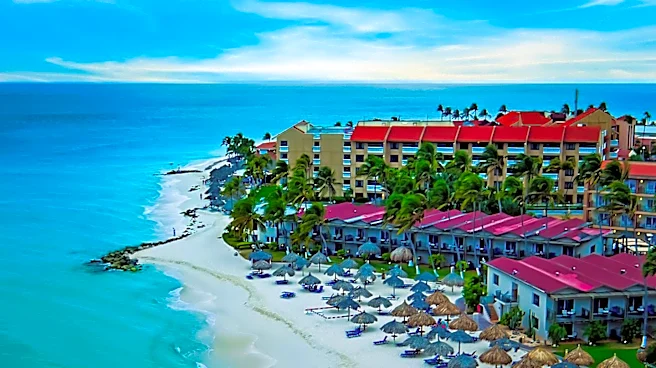
application in everyday life. The issue extends beyond courtrooms, impacting homes, classrooms, workplaces, and even religious institutions. Recent controversies, such as the Cooper’s Pen incident in Trelawny where homes were demolished on private land, highlight the tension between property rights and the treatment of displaced, vulnerable families. Questions are being raised about due process, the state's responsibility, and the fairness of actions that, while legal, may lack proportionality and human dignity. Similarly, the debate over access to Jamaica’s beaches raises concerns about whether tourism and private investment are leading to the exclusion of ordinary Jamaicans from their national heritage. The educational system also faces a justice challenge, with concerns that equal resource allocation may perpetuate unequal starting points, and the concentration of high-performing students in already successful schools reinforces inequality.
Why It's Important?
The 'justice drought' in Jamaica has profound implications for social equity and stability. When justice fails to flow, it erodes public trust in institutions, including the government, legal system, and even the Church. The displacement of vulnerable families without adequate due process can lead to increased social unrest and poverty. The potential exclusion of citizens from public spaces like beaches, due to private development, can foster resentment and a sense of disenfranchisement. In education, the perpetuation of unequal opportunities can hinder national development by limiting the potential of a significant portion of the population. The call for the Church to practice the justice it preaches underscores the broader societal expectation for all institutions to uphold ethical standards and ensure fair treatment. This situation highlights the critical need for a justice system that is not only legally sound but also equitable, compassionate, and accessible to all, especially those without resources or influence.
What's Next?
The article suggests that addressing the 'justice drought' requires more than just speeches; it demands concrete action from every congregation, institution, and citizen. There is a call for increased support for struggling schools, mentorship programs, legal aid, and outreach efforts. Restorative justice initiatives are presented as a model for practical application. The Church, in particular, is urged to lead by example, ensuring fair employment practices, transparent financial management, and protection for vulnerable individuals within its own operations. The ongoing debates surrounding land rights, access to public resources, and educational equity will likely continue to shape policy discussions. The emphasis is on moving beyond theoretical discussions to implement tangible solutions that ensure justice flows through all aspects of Jamaican society, from homes and schools to businesses and government.
Beyond the Headlines
The concept of a 'justice drought' extends beyond immediate legal or social issues, touching upon fundamental ethical and cultural dimensions. It questions the very definition of justice in a society where legal actions may not always align with fairness, human dignity, or proportionality. The article implicitly challenges the notion that legality equates to morality, particularly when vulnerable populations are disproportionately affected. It highlights the long-term societal shifts that can occur when power operates without sufficient concern for the powerless, potentially leading to a deepening of social divides and a weakening of community bonds. The call for institutions, including the Church, to embody justice in their internal practices underscores the idea that true societal change begins with individual and organizational integrity. This situation reflects a broader global challenge of ensuring that economic development and legal frameworks serve the interests of all citizens, not just the privileged, and that the pursuit of progress does not come at the cost of fundamental human rights and dignity.