


What's Happening?
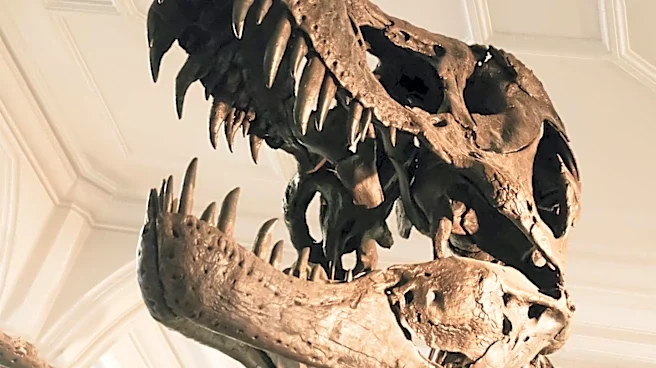
Researchers at the University of Alberta have uncovered evidence suggesting that a raptor, a smaller carnivorous dinosaur, fed on a larger Albertosaurus. This discovery stems from bite marks found on the jawbone of an eight-year-old sub-adult Albertosaurus,
a relative of Tyrannosaurus rex, which roamed Alberta approximately 70 million years ago. Joshua Doyon, a master's student in paleontology at the University of Alberta, led the research into these bite marks. By analyzing the spacing of the marks and comparing them to the teeth of other carnivorous dinosaurs from the same period, researchers concluded that a raptor was the most probable culprit. An alternative, though less likely, hypothesis considered was that a much younger member of the Albertosaurus species, less than two years old and about two meters long, cannibalized the larger dinosaur. This finding offers rare insight into the feeding interactions between carnivorous dinosaurs, particularly the instance of one carnivore consuming another, rather than solely preying on herbivores.
Why It's Important?
This research is significant because it provides a rare glimpse into the complex prehistoric food web and the interactions between carnivorous dinosaurs. Philip Currie, a University of Alberta professor of dinosaur paleobiology, highlighted the importance of this discovery, noting that Albertosaurus was a dominant predator of its time. The evidence of a smaller raptor, comparable in size to a German shepherd, feeding on an Albertosaurus, an apex predator, challenges previous assumptions about dinosaur dietary habits and predator-prey dynamics. This finding emphasizes that paleontologists can gain a deeper understanding of dinosaur biology by meticulously examining details on fossils, such as tooth marks, beyond just identifying and describing species. Such details can illuminate which animals fed on others and how different species coexisted and interacted within ancient ecosystems, contributing to a more nuanced understanding of prehistoric life.
What's Next?
The researchers hope that this discovery will encourage paleontologists and the public to pay closer attention to subtle details like small tooth marks on dinosaur bones, which might otherwise be overlooked. This increased scrutiny could lead to further discoveries that shed more light on dinosaur behavior and inter-species interactions. The methodology employed in this research, focusing on detailed fossil analysis, could be applied to other fossil finds, potentially revealing more instances of carnivore-on-carnivore feeding or other unexpected ecological relationships. Future studies might also delve into the specific types of raptors present in the Drumheller area, such as the Atrociraptor, to understand their hunting and scavenging behaviors in greater detail. This ongoing research promises to continually refine our understanding of prehistoric life and the intricate dynamics of ancient ecosystems.
Beyond the Headlines
The discovery of a raptor feeding on an Albertosaurus challenges the often-simplified portrayal of dinosaurs as strictly hierarchical predators. It suggests a more opportunistic and complex feeding behavior within carnivorous species, where even dominant predators could become food for smaller carnivores, especially after death. This finding underscores the importance of scavenging in prehistoric ecosystems and how it contributed to nutrient cycling and energy transfer. Furthermore, it highlights the continuous evolution of scientific understanding through meticulous observation and re-evaluation of existing fossil evidence. The popular image of raptors, often influenced by media like 'Jurassic Park,' typically depicts them as larger and more formidable than the actual species found in Alberta, such as the Atrociraptor. This research helps to ground public perception in scientific reality, showcasing the diversity and nuanced behaviors of these ancient creatures.