






What's Happening?
Portside inventories of BHP's Jimblebar fines, a type of iron ore, in China have decreased to a five-month low following the lifting of a ban by Beijing. This ban, which had been in place for several months, restricted the purchase of certain BHP ore products,
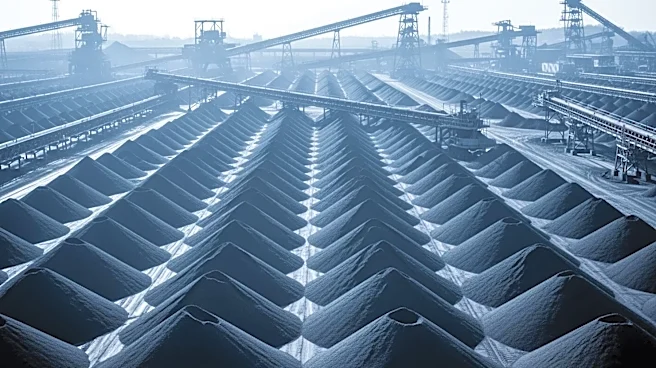
including Jimblebar fines, leading to an accumulation at ports. The removal of the ban in late April was expected to result in a rapid drawdown of these stocks, potentially affecting the prices of iron ore, a key ingredient in steelmaking. However, despite the reduction in inventory, prices have not been significantly impacted. As of May 12, stocks of Jimblebar fines at 15 major Chinese ports fell by 3.1% to 8.42 million tons, the lowest since late December. This inventory level is still nearly five times higher than it was last September. Some steel mills had switched to other iron ore products during the ban and are now readjusting their feedstock before purchasing more Jimblebar fines.
Why It's Important?
The reduction in Jimblebar ore stocks is significant as it reflects the dynamics of the global iron ore market, particularly the influence of Chinese policy decisions on international trade. China is the world's largest consumer of iron ore, and its decisions can have substantial impacts on global supply chains and pricing. The lifting of the ban and subsequent drawdown of stocks could signal a shift in China's approach to managing its iron ore imports, potentially affecting global market stability. For BHP, the resolution of the dispute and the resumption of normal trade relations with China could enhance its market position and financial performance. The situation also highlights the strategic importance of maintaining diversified supply chains and the potential vulnerabilities of relying heavily on a single market.
What's Next?
Moving forward, it will be important to monitor how quickly Chinese steel mills readjust their operations to incorporate Jimblebar fines back into their production processes. The pace of this adjustment could influence future demand and pricing for BHP's products. Additionally, any further policy changes by China regarding iron ore imports could have significant implications for global markets. Stakeholders, including BHP and other iron ore producers, will likely continue to engage with Chinese authorities to ensure stable trade relations. The situation also underscores the need for ongoing dialogue between major commodity producers and consumers to mitigate the risks of trade disruptions.