






What's Happening?
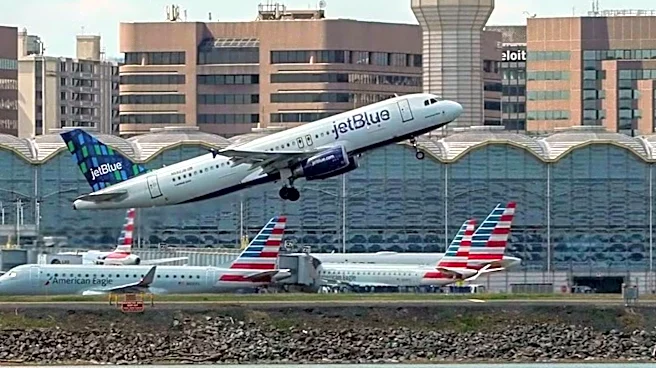
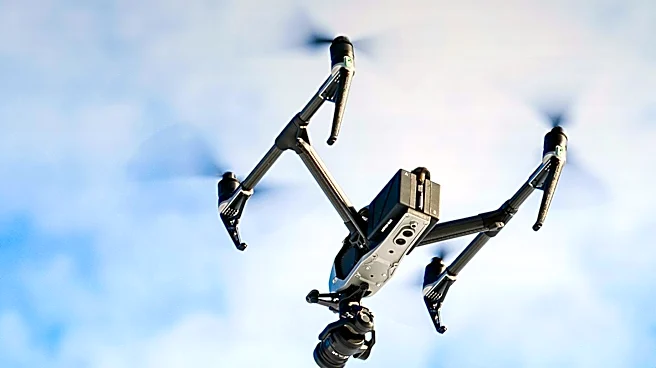
Flight operations at Reagan National Airport in Washington, D.C., were briefly paused on Wednesday night after pilots on two separate aircraft reported seeing a drone flying near a runway and a taxiway. The incident occurred around 8 p.m., with one pilot from
American Eagle Flight 5128 stating they saw a drone "flying by, probably halfway down the runway on final." Another pilot from Vista America also reported spotting a light that appeared to be a drone. The Federal Aviation Administration (FAA) confirmed that departures were paused for approximately 20 minutes and that local and federal authorities were notified. The airspace over Washington, D.C., is among the most restricted in the nation, with drones typically unable to operate due to geofencing technology. Any drone operation in this area requires special authorization from the FAA or indicates tampering with the device. The FBI stated it works with law enforcement partners to investigate illegal drone activity that could threaten aviation safety, critical infrastructure, or public safety, urging the public to report unsafe drone use.
Why It's Important?
This incident highlights significant security vulnerabilities and safety concerns within highly restricted U.S. airspace, particularly around critical infrastructure like major airports. The unauthorized presence of a drone near Reagan National Airport, which serves the nation's capital, underscores the challenges authorities face in monitoring and controlling airspace against potential threats. Such events can disrupt air travel, leading to delays and economic costs, but more critically, they pose a direct risk of collision with aircraft, potentially resulting in catastrophic outcomes. The fact that drones are typically geofenced out of D.C. airspace suggests either a sophisticated bypass of these security measures or a deliberate act, raising questions about the intent behind such operations. The FBI's involvement emphasizes the national security implications, as illegal drone activity could be exploited for surveillance, sabotage, or even as a delivery mechanism for harmful substances, impacting public safety and national defense.
What's Next?
Authorities, including the FBI and FAA, will likely continue their investigation to determine the origin of the drone and identify the operator. The focus will be on whether the drone was located and if its operator can be apprehended, facing potential fines and criminal charges, including jail time, under federal regulations. This event may prompt a review of existing drone detection and mitigation technologies and protocols around sensitive airspace. There could be increased calls for enhanced enforcement measures and public awareness campaigns regarding the dangers and legal consequences of unauthorized drone operations. Furthermore, the incident might accelerate the development and deployment of more advanced counter-drone systems to prevent future occurrences and bolster the security of U.S. airports and critical infrastructure against evolving drone threats. The outcome of this investigation could influence future policy decisions regarding drone regulation and airspace security.
Beyond the Headlines
The unauthorized drone sighting at Reagan National Airport points to a broader societal challenge concerning the proliferation of drone technology and the difficulty in regulating its use. While drones offer numerous benefits, their accessibility also presents significant risks, particularly in the hands of malicious actors or those unaware of strict airspace regulations. This incident could fuel public debate on the balance between technological innovation and national security, potentially leading to more stringent federal oversight of drone sales, registration, and operational zones. It also raises ethical questions about privacy and surveillance, as drones can be used to gather intelligence without consent. The long-term implications could include a shift towards more integrated and automated airspace management systems that can detect, identify, and neutralize unauthorized drones, transforming how U.S. airspace is protected and managed in an increasingly drone-filled world.