


What's Happening?
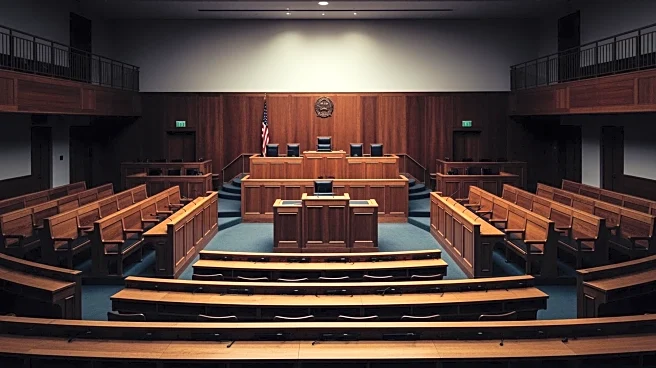
The Supreme Court has issued a decision blocking President Trump's order to deploy National Guard troops in the Chicago area. This decision comes after a lower court ruling halted the deployment, and a federal appeals court declined to intervene. The Supreme Court's
decision, which saw dissent from three conservative justices, marks a significant moment in the debate over federal authority in domestic law enforcement. The White House stated that the deployment was intended to protect federal law enforcement officers and prevent the destruction of federal property. Despite the ruling, the administration maintains its commitment to enforcing immigration laws and safeguarding federal personnel.
Why It's Important?
The Supreme Court's decision is pivotal in the ongoing debate over the balance of power between state and federal governments, particularly concerning the military's role in civilian affairs. This ruling could influence future conflicts over federal authority, especially in Democratic-led cities where similar deployments have been proposed. The case has sparked discussions about states' rights, constitutional law, and the use of emergency executive powers. The decision may also impact ongoing lawsuits in cities like Los Angeles and Portland, testing the boundaries of federal military deployment in domestic settings.
What's Next?
While the Supreme Court's order is not a final ruling, it sets a precedent that could affect other lawsuits challenging similar deployments in Democratic-led cities. The possibility of President Trump invoking the Insurrection Act remains, as the court's opinion did not address this authority. The Insurrection Act allows the president to use military forces to suppress rebellion or enforce laws, providing broad discretion with few legal constraints. The administration may consider this option if further legal challenges arise.
Beyond the Headlines
The Supreme Court's decision highlights the ongoing tension between federal authority and states' rights, a core issue in American constitutional law. The ruling may lead to increased scrutiny of executive powers and their limits, particularly in the context of domestic law enforcement. This case could also influence public perception of federal intervention in state affairs, potentially affecting future policy decisions and political dynamics.