







What's Happening?
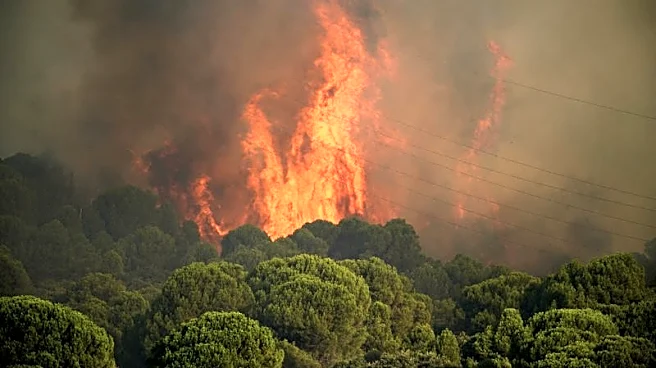
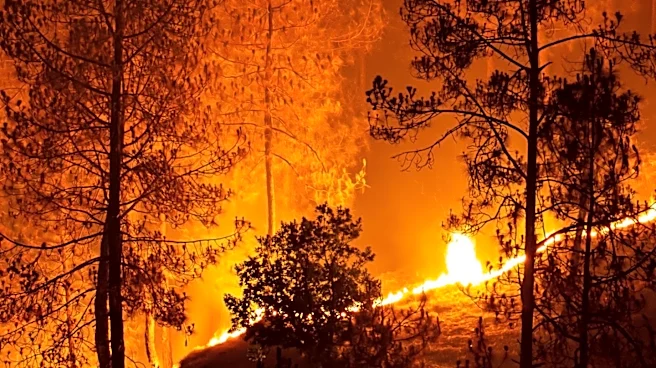
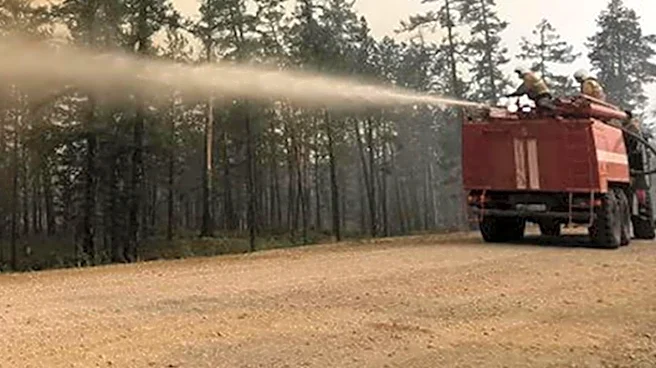
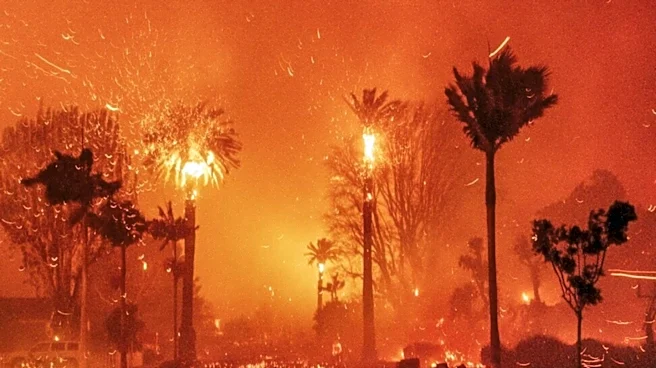
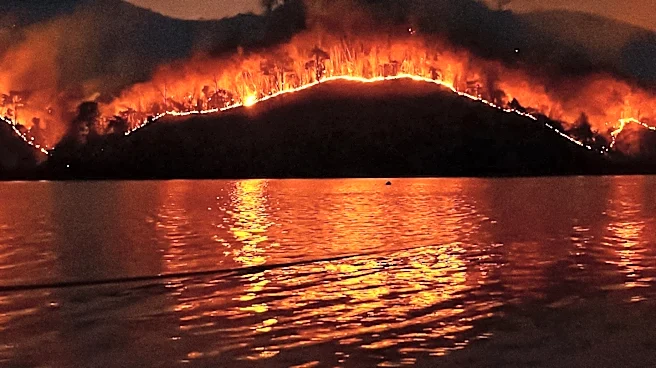
France and Spain are grappling with severe wildfires that have led to the evacuation of over 300,000 people. In France, the main fire is located in the southwest Gironde region near Bordeaux, described as 'extremely intense and unpredictable,' generating
its own winds and advancing erratically. The French Interior Minister, Laurent Nunez, has stated that the situation remains unfavorable, with 250,000 people evacuated. In Spain, fires near Madrid and a new front near Valencia have forced additional evacuations. Spanish Prime Minister Pedro Sanchez has acknowledged the challenging situation but noted some positive signs towards containment. The fires are exacerbated by heatwaves and a lack of rain, with other EU countries providing assistance.
Why It's Important?
The wildfires in France and Spain highlight the increasing frequency and intensity of natural disasters, which scientists attribute to climate change. These events have significant implications for public safety, environmental conservation, and economic stability in the affected regions. The evacuations disrupt local communities and economies, particularly during the peak tourist season. The fires also pose a threat to natural heritage and biodiversity, as noted by Spain's King Felipe VI. The international response, including aid from other EU countries, underscores the need for collaborative efforts in disaster management and climate change mitigation.
What's Next?
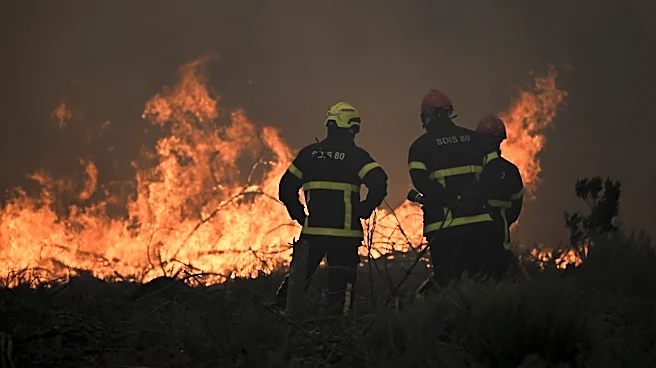
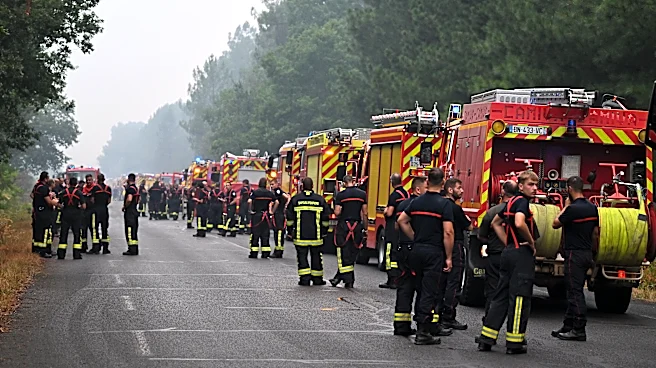
Authorities in both countries are focused on containing the fires and preventing further damage. In France, efforts are concentrated on the Gironde region, with thousands of firefighters and military personnel deployed. In Spain, the focus is on managing the fires near Madrid and Valencia, with ongoing evacuations as needed. The situation remains dynamic, with weather conditions playing a critical role in firefighting efforts. Long-term, these events may prompt policy discussions on climate change adaptation and emergency preparedness.