





What's Happening?
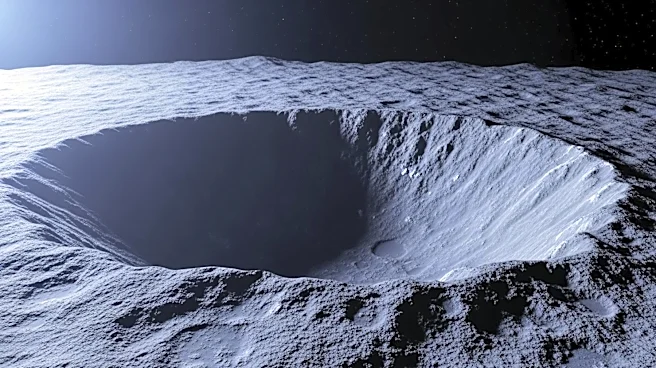
Researchers from the Weizmann Institute of Science and collaborators in the U.S. have identified ancient 'cold traps' on the Moon's surface, which have been accumulating ice for at least 1.5 billion years. These cold traps, located near the Moon's South
Pole, are permanently shadowed regions that maintain extremely low temperatures, allowing ice to persist. The study, published in Nature Astronomy, suggests that ice has been building up from continuous sources rather than single events. This discovery is significant for future lunar missions, as ice can be used for water, fuel, and studying celestial history.
Why It's Important?
The identification of ancient cold traps is crucial for future lunar exploration and the potential establishment of permanent bases on the Moon. Ice is a valuable resource for sustaining human presence and supporting deep-space travel. Understanding the distribution and origin of lunar ice can provide insights into the Moon's history and the broader solar system. This research supports NASA's Artemis missions, which aim to explore the Moon's South Pole and utilize its resources for long-term exploration goals.