






What's Happening?
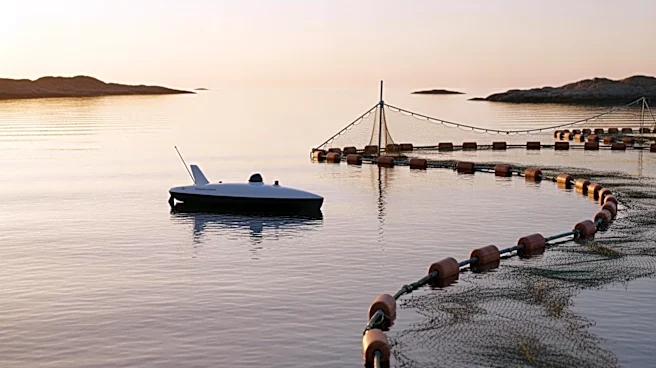
Greek fishermen recently discovered a five-meter drone boat of Ukrainian design near the island of Lefkada in the Ionian Sea. The vessel, identified as a Ukrainian Magura V3, was initially treated as a potential explosive device. Greek military EOD specialists
dismantled the boat, confirming it had detonators but no explosives. The boat's engine was running, indicating recent operational activity. This incident highlights the risks associated with unmanned vessels losing control, potentially leading to diplomatic incidents or civilian harm. The discovery comes amid suspicions of Ukrainian strikes on Russian vessels in the Mediterranean, although these remain unproven.
Why It's Important?
The discovery of the Ukrainian drone boat underscores the growing complexity of maritime security in the Mediterranean region. Unmanned vessels like the Magura V3 pose significant risks if they lose control, including potential diplomatic tensions and civilian safety threats. The incident also highlights the strategic use of drone technology in modern conflicts, as evidenced by the suspected Ukrainian attacks on Russian vessels. This development could influence naval strategies and international maritime policies, emphasizing the need for robust control and recovery mechanisms for unmanned systems to prevent unintended consequences.
What's Next?
The incident may prompt increased scrutiny and regulation of unmanned maritime systems, particularly in conflict-prone regions. Navies and special-warfare units might enhance their protocols for managing lost or malfunctioning drones to mitigate risks. Additionally, diplomatic discussions could arise regarding the use of such technology in international waters, potentially leading to new agreements or treaties. The situation also calls for improved collaboration between nations to address the challenges posed by unmanned vessels and ensure maritime safety.
Beyond the Headlines
The use of drone boats in military operations reflects a broader trend towards automation and remote warfare, raising ethical and legal questions about accountability and the rules of engagement. The incident also highlights the potential for technological advancements to outpace existing regulatory frameworks, necessitating updates to international maritime law. Furthermore, the reliance on such technology could lead to an arms race in unmanned systems, with nations seeking to develop more advanced and autonomous capabilities.