



What's Happening?
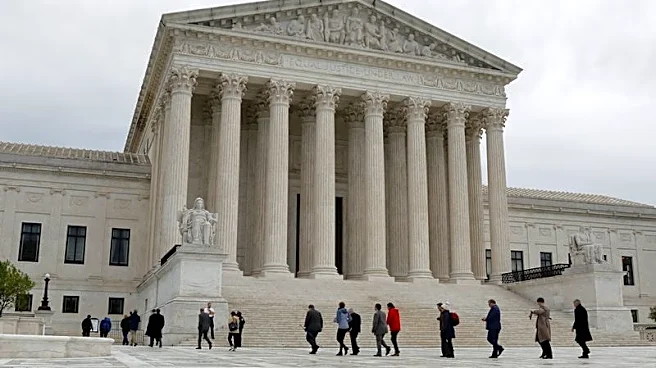
US Supreme Court Justice Samuel Alito will not participate in an upcoming case concerning a lawsuit against oil companies for their alleged role in fueling climate change. The dispute, scheduled to be heard on October 5, involves a bid by oil companies to dismiss
a lawsuit filed by officials in Boulder, Colorado, against Exxon Mobil and Suncor Energy in 2018. Justice Alito's recusal was communicated to the parties by Scott Harris, clerk of the Supreme Court, who did not provide a specific rationale beyond stating that Alito determined he would not continue to participate. This decision comes after Alito had initially declined calls from watchdog and environmental groups to recuse himself, despite owning stock in several oil and gas companies, though not in Exxon Mobil or Suncor Energy. He had previously stepped aside when the litigation reached the court at an earlier stage in 2023. Alito's financial disclosures indicate holdings in ConocoPhillips and Phillips 66, which are defendants in separate but similar climate-related lawsuits.
Why It's Important?
Justice Alito's recusal is significant because it removes a conservative voice from a potentially landmark climate change case, which could influence the outcome of numerous similar lawsuits across the United States. The Supreme Court's decision in this case will determine whether federal law preempts state-level claims seeking damages for harms caused by greenhouse gas emissions, and whether the court has jurisdiction to hear the case at this stage. A ruling in favor of the oil companies could set a precedent that limits the ability of states and localities to pursue climate-related litigation against fossil fuel companies, potentially impacting environmental policy and corporate accountability. Conversely, a ruling allowing these lawsuits to proceed could open the door for more legal challenges against the energy industry. The absence of Justice Alito, one of the court's most conservative members, could shift the ideological balance for this specific case, potentially affecting the final judgment in a court with a 6-3 conservative majority. The Trump administration has previously supported Exxon and Suncor, arguing for federal preemption of Boulder's claims.
What's Next?
The Supreme Court will hear arguments in this climate case on October 5, the first day of its new term. With Justice Alito's recusal, eight justices will consider the dispute, which could determine the fate of dozens of state and local climate-related lawsuits against fossil fuel companies. The court will address whether federal law precludes certain state law claims seeking damages for harms allegedly caused by greenhouse gas emissions and whether it has jurisdiction to decide the case at this stage. The outcome will be closely watched by environmental groups, oil and gas companies, and state and local governments across the U.S., as it could establish a significant legal framework for future climate litigation. Depending on the ruling, there could be a surge or decline in similar lawsuits, impacting the financial liabilities of energy companies and the strategies of environmental advocates. The decision will also provide clarity on the interplay between federal and state authority in addressing climate change impacts.
Beyond the Headlines
Justice Alito's recusal highlights broader ethical considerations regarding judicial impartiality and potential conflicts of interest, particularly when justices hold investments in industries involved in cases before the court. While he did not provide a rationale, his decision to step aside, especially after initially declining to do so, underscores the pressure from watchdog and environmental groups for judicial transparency and accountability. This situation brings to light the ongoing debate about the financial holdings of Supreme Court justices and how these might influence public perception of judicial fairness. The case itself delves into the complex legal and scientific challenges of attributing climate change impacts to specific entities and the appropriate legal avenues for seeking redress. It touches upon fundamental questions of corporate responsibility, environmental justice, and the role of the judiciary in addressing global issues like climate change, which often have significant economic and social ramifications.