
What's Happening?
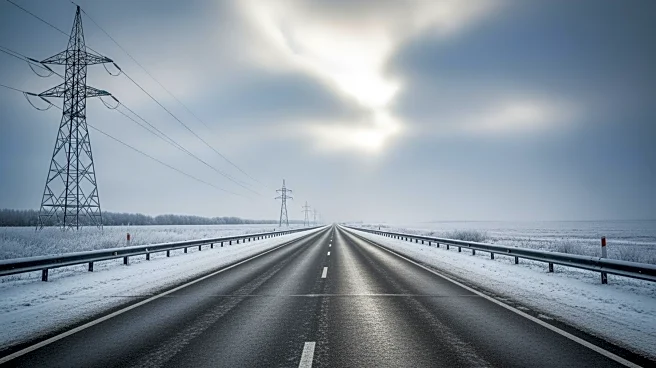
A severe winter storm has paralyzed much of the eastern United States, causing widespread disruptions and economic losses. The storm, characterized by ice, snow, and freezing temperatures, has led to the grounding
of over 11,400 flights and left hundreds of thousands without power. Economists and meteorologists are assessing the financial impact, with estimates suggesting the storm could cost billions of dollars. AccuWeather has preliminarily estimated the cost at between $105 billion and $115 billion, though some experts consider this figure to be an overestimate. The storm has highlighted the interconnectedness of the economy with weather conditions, as disruptions to transportation and power grids have ripple effects across various sectors.
Why It's Important?
The economic impact of severe winter storms underscores the vulnerability of the U.S. economy to extreme weather events. Such disruptions can significantly affect GDP, with estimates suggesting that severe weather events can reduce GDP by 0.5% to 2% annually. This translates to potential losses of $150 billion to $600 billion, affecting industries reliant on transportation and power. The storm also raises concerns about infrastructure resilience and the need for improved disaster preparedness. As climate change increases the frequency and severity of such events, the economic stakes continue to rise, necessitating strategic planning and investment in infrastructure and emergency response systems.
What's Next?
In the aftermath of the storm, efforts will focus on restoring power and transportation services, as well as assessing and repairing damage. Businesses and government agencies will need to evaluate their disaster response strategies and consider investments in infrastructure to mitigate future disruptions. The storm may also prompt discussions on climate change adaptation and the economic implications of increasingly frequent extreme weather events. Policymakers and industry leaders will need to collaborate on solutions to enhance resilience and minimize economic losses in the face of such challenges.