






What's Happening?
Public sentiment towards Artificial Intelligence (AI) is increasingly negative, with a growing number of Americans expressing concern rather than excitement about its widespread use. A Pew Research study indicates that 52% of Americans are more concerned
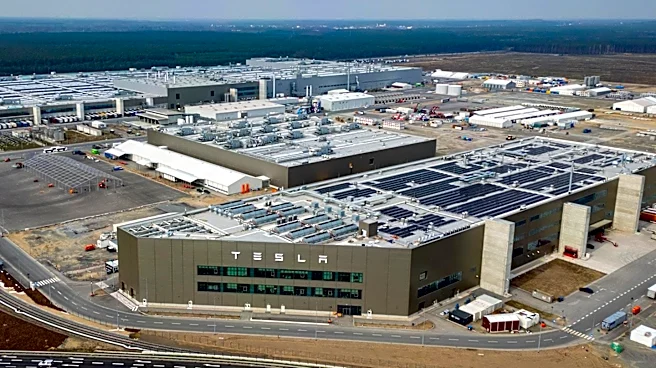
than excited about AI, a significant increase from 37% in 2021. This skepticism is reflected in various polls, including a CNBC survey where a majority of 18- to 34-year-olds distrust AI industry leaders to act responsibly, and an Economist/YouGov poll showing over 70% believe AI is advancing too quickly. This discontent is translating into tangible business challenges, as tech companies face public relations crises over plans to build AI data centers across the U.S., leading them to offer incentives like job guarantees and community investments. Consumers perceive AI as a tool for cheating in education and a threat to intellectual property, rather than a beneficial innovation, leading to a preference for 'retro' technology and in-person activities.
Why It's Important?
The escalating public skepticism towards AI poses a significant challenge to the technology industry's growth and adoption strategies. This negative sentiment is not merely a PR issue but a business problem, impacting investment in AI infrastructure and potentially slowing down the integration of AI into everyday products and services. The concerns about job displacement, the ethical use of intellectual property, and the environmental impact of data centers are resonating with a broad segment of the population. This resistance could lead to increased regulatory scrutiny, stricter data privacy laws, and a demand for greater transparency from AI developers. The shift towards 'retro' technology and in-person interactions also suggests a broader societal pushback against pervasive digital influence, indicating that consumers are questioning the trade-offs associated with technological advancement when perceived benefits do not outweigh the costs or risks.
What's Next?
In response to growing public discontent, AI companies and industry leaders are beginning to acknowledge the 'crisis of trust' and the need to deliver tangible benefits to 'regular people.' This may lead to a strategic shift in AI development, focusing more on applications that address real-world problems and improve daily life, rather than solely on advanced technological capabilities. Companies might increase their efforts in community engagement and corporate social responsibility to mitigate negative perceptions associated with data center construction and job displacement. Policymakers are likely to face increased pressure to regulate AI, potentially leading to new legislation concerning data privacy, algorithmic bias, and intellectual property rights. The industry may also see a greater emphasis on ethical AI development and transparent communication about AI's capabilities and limitations to rebuild public trust.
Beyond the Headlines
The current public backlash against AI reflects a deeper societal anxiety about the pace of technological change and its implications for human agency, economic stability, and cultural values. Unlike previous technological revolutions, AI's ability to mimic human intelligence and automate complex tasks challenges fundamental notions of work, creativity, and even identity. The preference for 'retro' technology and in-person activities suggests a yearning for authenticity and human connection in an increasingly digitized world. This sentiment could foster a cultural movement that prioritizes human-centric values over technological efficiency, potentially influencing consumer choices, educational curricula, and urban planning. The debate over AI's role in society is not just about its technical capabilities but about the kind of future humanity wants to build, balancing innovation with ethical considerations and societal well-being.