


What's Happening?
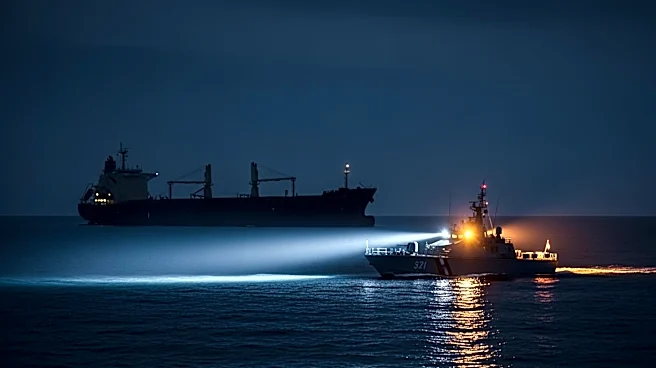
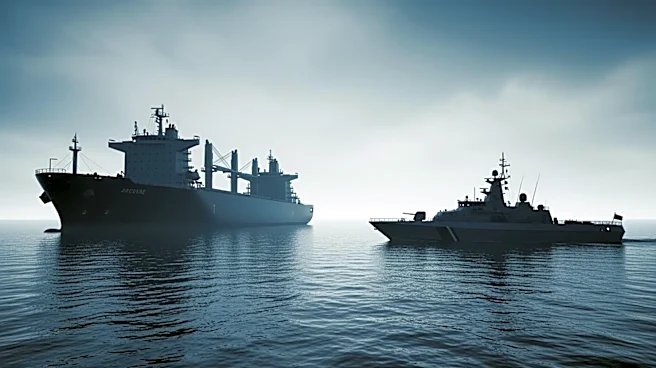
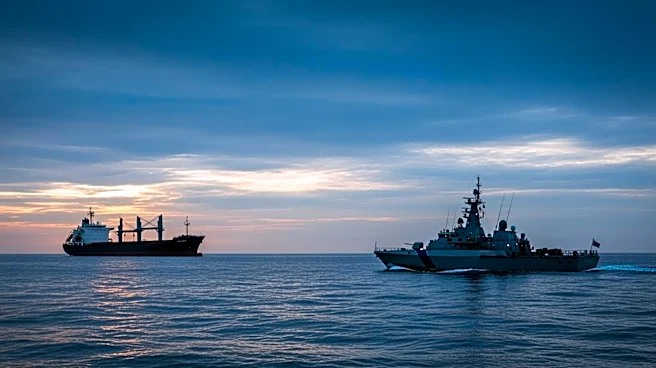
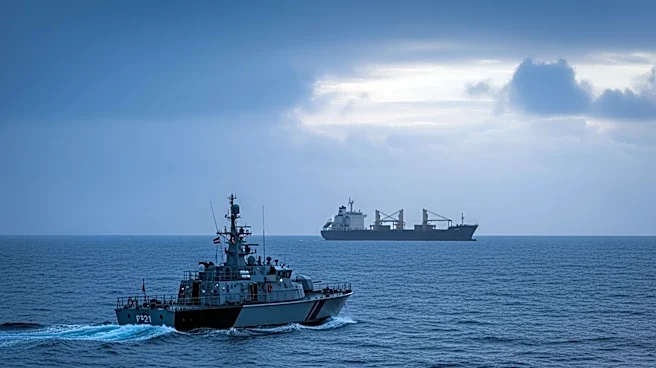
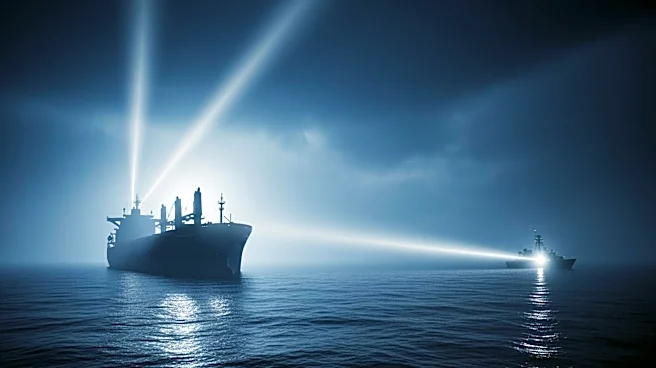
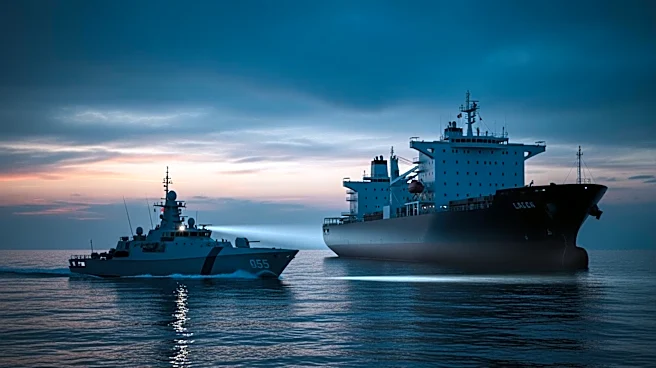
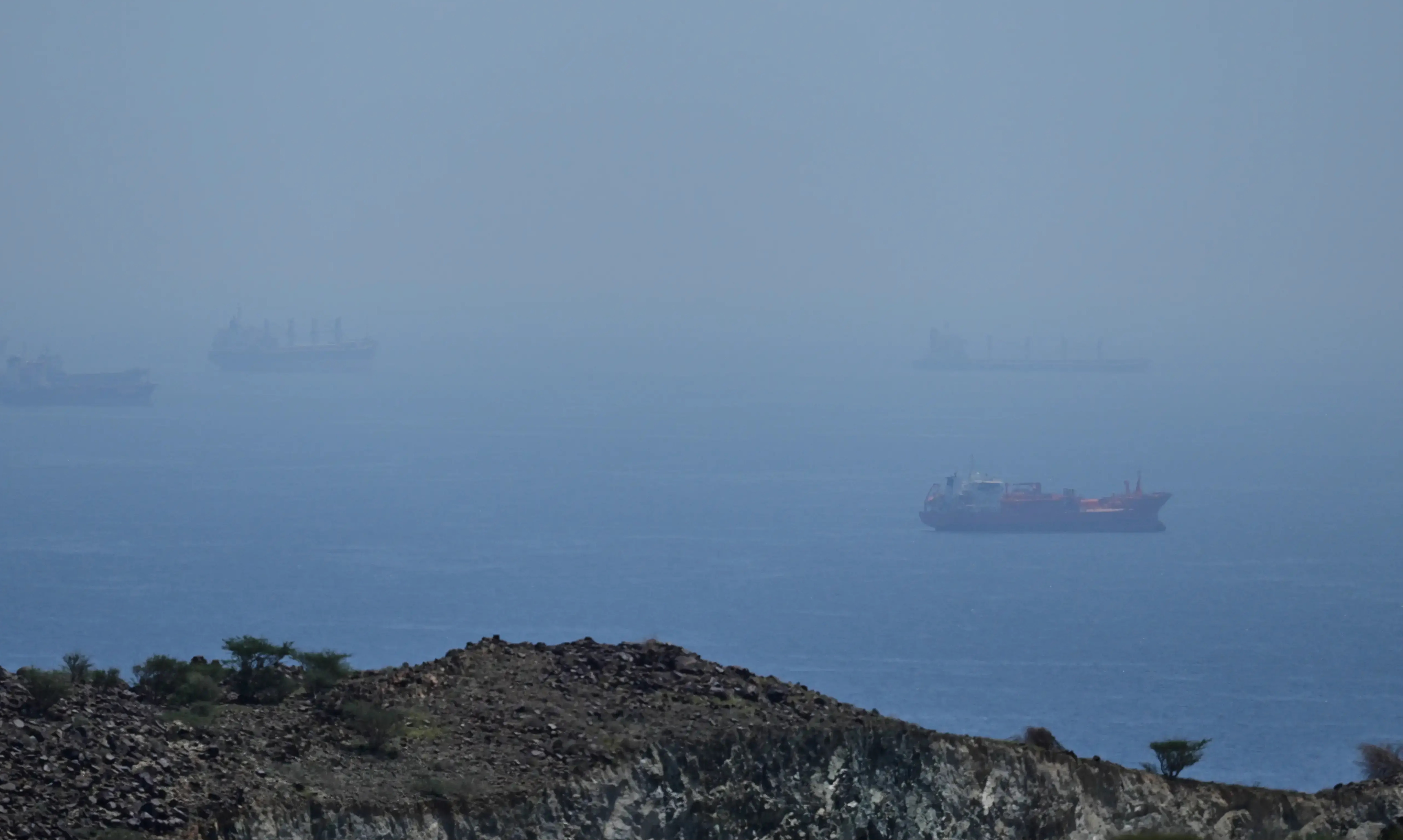
The U.S. Navy has taken decisive action by firing upon and boarding an Iranian container ship, the Touska, in the Gulf of Oman. This marks the first use of kinetic methods in enforcing a selective blockade against Iran. According to President Trump, the USS
Spruance issued warnings to the Touska, which were ignored, leading to the decision to disable the ship by targeting its engine room. The U.S. Marines subsequently boarded the vessel, taking full control. This incident is part of a broader U.S. strategy to curb Iranian oil exports, with a focus on preventing laden, outbound vessels from leaving Iranian ports. However, some inbound vessels have been allowed to pass, providing Iran with additional floating storage capacity.
Why It's Important?
This development underscores the escalating tensions between the U.S. and Iran, particularly concerning Iran's oil exports. The U.S. aims to exert maximum pressure on Iran's economy by disrupting its oil trade, a critical revenue source for the country. The blockade and subsequent seizure of the Touska could further strain U.S.-Iran relations and potentially provoke retaliatory actions from Iran, as indicated by Iran's military command. The incident also highlights the U.S.'s commitment to enforcing sanctions and maintaining a strategic presence in the region, which could have significant implications for global oil markets and regional stability.
What's Next?
Iran has vowed to retaliate against what it perceives as a violation of a ceasefire agreement, suggesting potential military or diplomatic responses. The U.S. may continue to enforce the blockade, potentially leading to further confrontations. The international community will likely monitor the situation closely, as any escalation could impact global oil prices and regional security dynamics. Additionally, diplomatic efforts may be pursued to de-escalate tensions and address the underlying issues driving the conflict.