



What's Happening?
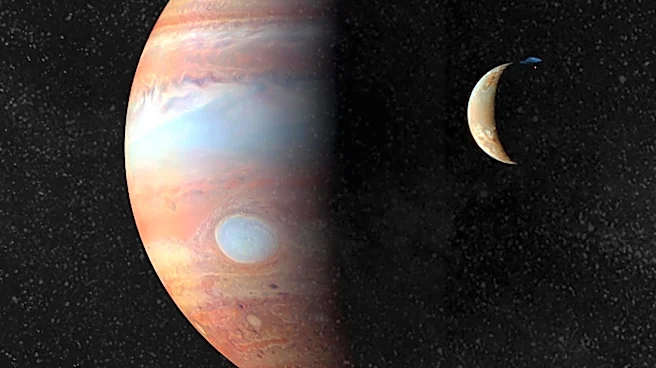
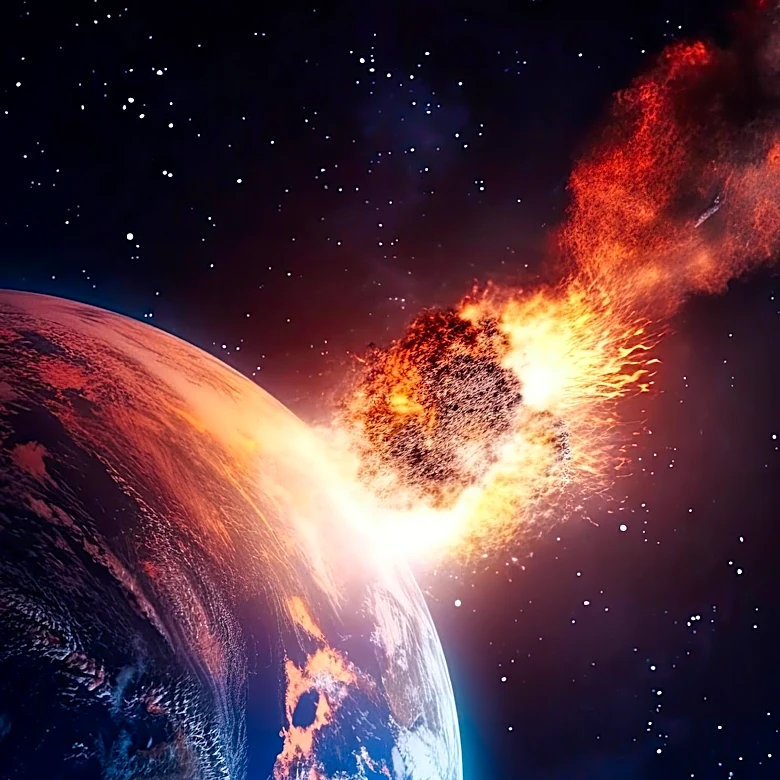
A recent study has traced the origin of the asteroid that caused the extinction of the dinosaurs to the outer solar system, beyond Jupiter. This discovery was made by analyzing rare metals in the debris left by the impact, which occurred approximately
66 million years ago. The asteroid, estimated to be about ten kilometers wide, struck the Yucatán Peninsula in Mexico, leading to the extinction of roughly three-quarters of Earth's species, including all non-avian dinosaurs. The study, led by geochemists, used ruthenium isotopes to identify the asteroid as a carbonaceous chondrite, a type of primitive asteroid formed in the cold outer reaches of the solar system. This finding challenges previous assumptions about the asteroid's origin and provides new insights into the solar system's history.
Why It's Important?
The identification of the asteroid's origin has significant implications for our understanding of the solar system's dynamics and the history of life on Earth. By pinpointing the asteroid's source, scientists can better understand the processes that led to its journey towards Earth. This knowledge is crucial for assessing the potential threat of future impacts from similar celestial bodies. Additionally, the study enhances our understanding of the solar system's formation and the distribution of materials within it. The findings also underscore the importance of continued research and monitoring of near-Earth objects to prevent potential future catastrophic impacts.
What's Next?
Future research will likely focus on further analyzing the isotopic signatures of other impact events to refine our understanding of the solar system's history. Scientists may also increase efforts to monitor and catalog near-Earth objects, particularly those originating from the outer solar system, to assess their potential threat to Earth. Additionally, the study may prompt further exploration of the outer solar system to understand the conditions that led to the formation of such asteroids. This research could also inform planetary defense strategies aimed at mitigating the risk of future impacts.