






What's Happening?
The US Army is actively working to dismantle outdated technological barriers that have historically prevented seamless communication between its weapons, sensors, and command systems. This initiative is part of a broader effort to enhance battlefield
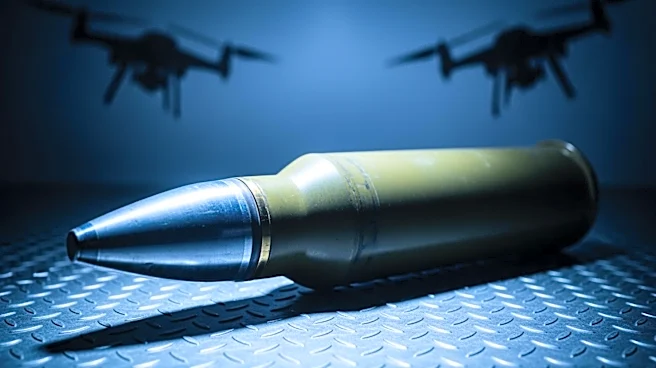
decision-making speed and efficiency. The Army's Next Generation Command and Control (NGC2) software, which is under continuous development, employs an open architecture to facilitate the integration of new tools from various vendors. This approach allows for faster data movement and the addition of automated tools for tasks such as ammunition estimation. A recent hackathon, Project Jailbreak, brought together top defense companies and the Army to connect various systems, including counter-drone and missile defenses, to ensure they can communicate effectively. This effort is inspired by Ukraine's integration of drones and sensors into its battle management program, Delta.
Why It's Important?
The integration of advanced command and control systems is crucial for the US Army as it seeks to maintain a technological edge in modern warfare. By enabling different systems to communicate seamlessly, the Army can make faster and more informed decisions on the battlefield, which is vital in high-stakes environments. This initiative not only enhances operational efficiency but also reduces the cognitive load on soldiers, allowing them to focus on critical tasks. The involvement of major defense firms in this project underscores the importance of collaboration between the military and private sector in developing cutting-edge technology. The success of this integration could set a precedent for future military technology development, potentially influencing defense strategies and procurement processes.
What's Next?
The Army plans to continue its efforts to integrate additional systems, such as long-range precision fires, into its command and control framework. Future hackathons are expected to further refine these integrations and expand the scope to include new systems. The Army aims to deploy the remaining updates from the recent hackathon within the next 30 days, with ongoing efforts to ensure backward compatibility with existing systems. This continuous development process will likely involve further collaboration with defense contractors and may lead to the adoption of similar integration strategies across other branches of the military.