






What's Happening?
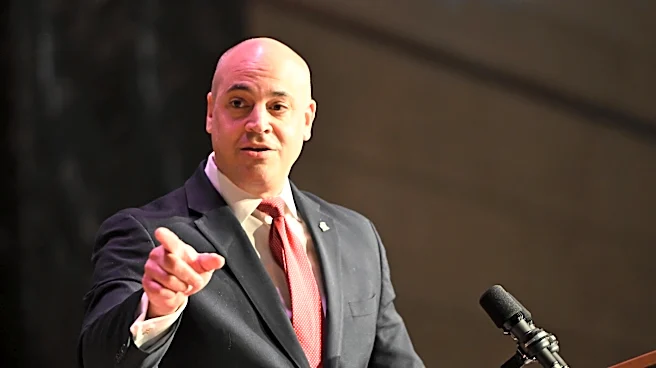
Fourteen individuals, including 13 current or former Penn State students, have been charged in connection with an alleged college drug ring that authorities say forced fraternity pledges to cut and package cocaine. Pennsylvania Attorney General Dave Sunday
announced the charges, revealing that the operation ran from 2023 to 2024. The alleged leader, 24-year-old Agostino Abbatiello, surrendered after failing to appear for an arraignment on charges including possession with intent to deliver and conspiracy. Court documents indicate that bulk quantities of cocaine were obtained from contacts in Philadelphia and New York. The drugs were primarily processed at the Sigma Chi and Delta Upsilon fraternity houses, utilizing frat brothers and pledges as labor, and then distributed among Penn State students. Four individuals face charges of conspiracy, dealing in proceeds of unlawful activity, felony corrupt organizations, and other offenses. Another defendant is charged with felony conspiracy and criminal use of a communication facility, while eight others face misdemeanor drug possession charges. Paul Robinson, the father of a student accused of being a main supplier, is charged with felony tampering, hindering apprehension, and obstructing the investigation for allegedly concealing evidence.
Why It's Important?
This case exposes a serious criminal enterprise operating within a university setting, highlighting the vulnerability of college students, particularly fraternity pledges, to exploitation in illicit activities. The alleged use of fraternity houses as drug processing and distribution centers raises significant concerns about the oversight and culture within Greek life organizations. The involvement of pledges in cutting and bagging cocaine suggests a coercive environment, potentially leveraging social pressure and the desire for acceptance. This situation underscores the broader issue of drug trafficking on college campuses and the potential for such activities to escalate beyond simple recreational use into organized crime. The charges against a parent for obstructing justice further illustrate the far-reaching consequences of these criminal networks and the lengths to which individuals may go to protect those involved. The Attorney General's statement that this was an "upper-level trafficking organization" for the region emphasizes the gravity and scale of the operation, moving beyond typical college drug dealing.
What's Next?
Agostino Abbatiello has been ordered jailed without bail. The 14 charged individuals will proceed through the legal system, facing various felony and misdemeanor charges. Penn State has placed Delta Upsilon on interim suspension, while Sigma Chi, which is not recognized by the university, has had its chapter operations suspended on an interim basis by its executive director. Both fraternities have stated that any members involved will be held accountable, with expulsions or suspensions already occurring or pending. The legal proceedings will determine the guilt or innocence of the defendants and the appropriate penalties. The university and national fraternity organizations will likely continue their internal investigations and may implement stricter policies or oversight measures to prevent similar incidents. The case could also lead to increased scrutiny of Greek life activities and drug enforcement efforts on college campuses across the state and potentially nationally.
Beyond the Headlines
This incident delves into the ethical and cultural dimensions of fraternity life, particularly the practice of pledging and the potential for hazing to morph into criminal exploitation. The alleged coercion of pledges to participate in drug processing raises questions about the power dynamics within these organizations and the psychological pressure exerted on new members. The case also highlights the broader societal challenge of drug abuse and trafficking, demonstrating how it can infiltrate seemingly legitimate institutions like universities. The involvement of a parent in obstructing justice points to a breakdown of ethical boundaries and the potential for family members to become entangled in criminal activities. This event could trigger a re-evaluation of university policies regarding Greek life, drug enforcement, and student welfare, potentially leading to reforms aimed at fostering safer and more responsible campus environments. The long-term impact on the reputations of the involved fraternities and Penn State could be significant, prompting a need for comprehensive cultural shifts.