
What's Happening?
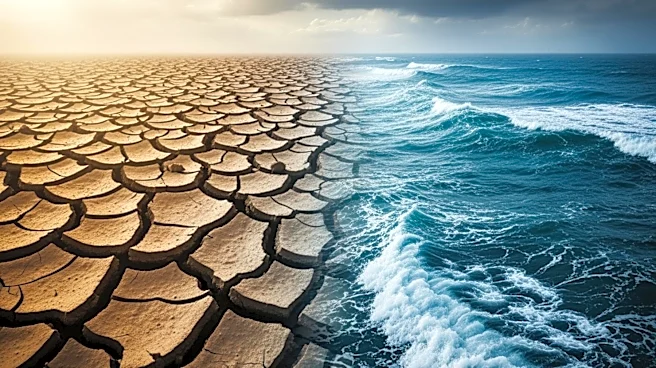
Scientists have projected that New Orleans could face severe challenges due to rising sea levels, potentially becoming an island by 2070. This projection is based on a study involving experts from institutions
such as Tulane University and Yale University, which suggests that the city could lose up to 75% of its wetlands by 2070. These wetlands currently serve as a natural buffer against hurricanes and storm surges. The study warns that if sea levels rise by 3 meters, New Orleans could be surrounded by the Gulf of Mexico, and a rise of 7 meters would render any coastal defenses ineffective. The potential need to relocate the city's population is being discussed, although experts acknowledge the complexity and cultural significance of such a move.
Why It's Important?
The potential relocation of New Orleans carries significant implications for the U.S. The city is a critical hub for agricultural exports and industrial freight, with its port and the lower Mississippi River complex playing vital roles in the national economy. Additionally, New Orleans is culturally unique, with a rich heritage that includes African, French, Spanish, and Indigenous influences. The loss of the city would not only impact the economy but also represent a cultural impoverishment. The ongoing loss of wetlands, which are crucial for wildlife and storm protection, further exacerbates the environmental crisis facing the region.
What's Next?
Experts suggest that instead of relocating New Orleans, efforts should focus on making the city more resilient to environmental changes. This includes implementing engineering solutions, revising zoning laws to prevent development in flood-prone areas, and investing in infrastructure that accommodates rising water levels. These strategies aim to protect the city while preserving its cultural and economic significance. The discussion around New Orleans' future highlights the need for proactive planning and adaptation to climate change impacts.
Beyond the Headlines
The situation in New Orleans underscores broader challenges related to climate change and urban planning. It raises ethical questions about how to balance economic, cultural, and environmental priorities in the face of existential threats. The potential relocation of a major city like New Orleans could set a precedent for how other vulnerable regions address similar challenges. This scenario also highlights the importance of sustainable development and the need for innovative solutions to protect communities from the impacts of climate change.