


What's Happening?
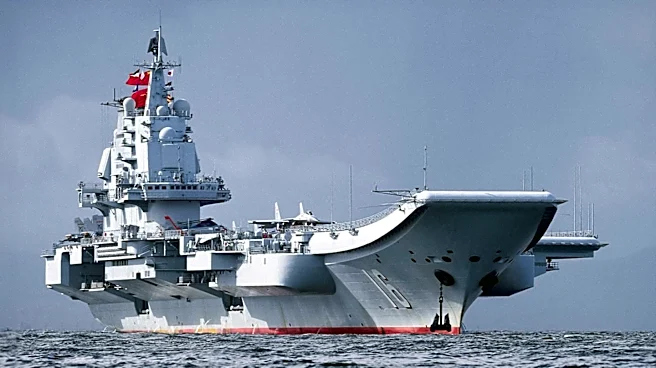
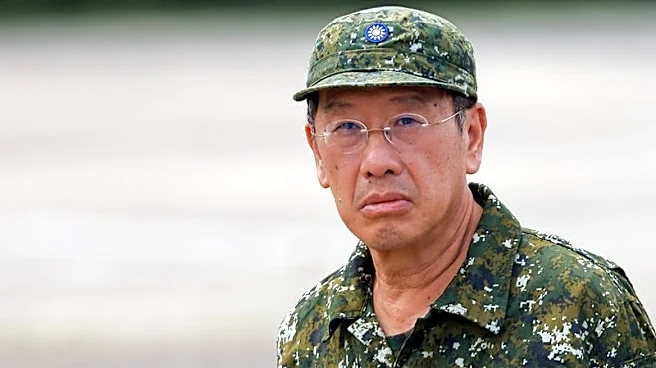
Taiwan's Ministry of Defence, through Minister Wellington Koo, has reported that China is conducting 'area denial' drills in the Western Pacific. These exercises involve the Chinese aircraft carrier Liaoning and other naval formations. Taiwan National
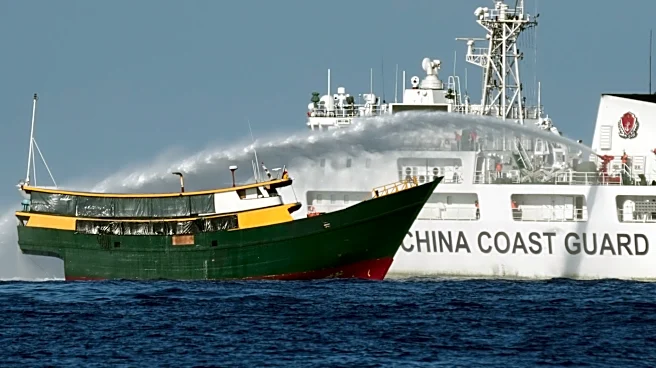
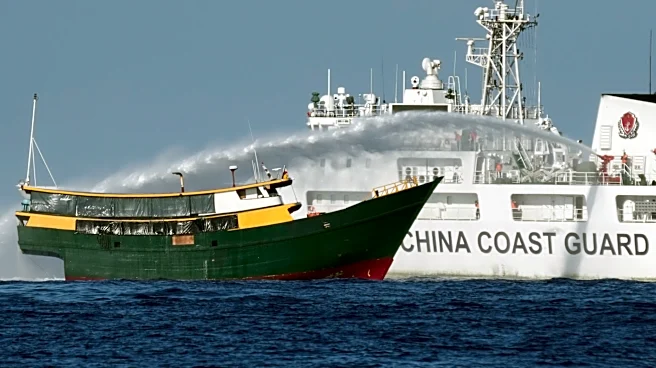
Security Council Secretary-General Joseph Wu previously detailed the deployment of over 100 Chinese naval and coast guard ships operating around Taiwan, in the South China Sea, and extending into the Pacific. Additionally, Taiwan's defense ministry noted a significant increase in Chinese air force aircraft in the vicinity of the island. China, which considers democratically governed Taiwan as its own territory, frequently dispatches its military assets into the airspace and waters surrounding Taiwan. These drills are perceived as part of an Anti-Access/Area Denial (A2/AD) strategy, designed to restrict the movement and access of foreign forces, potentially complicating any intervention by the U.S. and its allies in a hypothetical conflict over Taiwan.
Why It's Important?
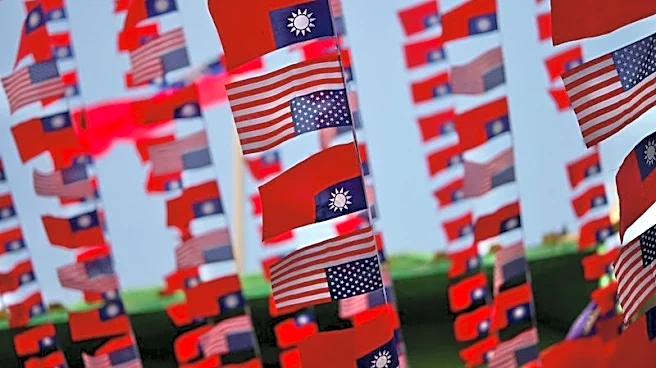
These Chinese 'area denial' drills in the Western Pacific carry significant implications for U.S. strategic interests and regional stability. The U.S. maintains an unofficial but robust relationship with Taiwan, including providing defensive capabilities. The A2/AD strategy demonstrated by China aims to deter or complicate any potential U.S. military intervention in a Taiwan contingency, thereby challenging the existing security architecture in the Indo-Pacific. This could force the U.S. to re-evaluate its military posture and capabilities in the region, potentially leading to increased defense spending and technological advancements to counter China's growing naval power. For U.S. allies in the region, such as Japan and South Korea, these drills underscore the increasing assertiveness of China and could prompt closer security cooperation with the U.S. and among themselves. The drills also raise concerns about freedom of navigation in international waters, a principle strongly upheld by the U.S., and could impact global trade routes if tensions escalate.
What's Next?
The continuation of these Chinese military exercises is likely to prompt further monitoring and analysis from Taiwan, the U.S., and its allies. Taiwan will likely continue to track Chinese military movements and report on them, aiming to maintain transparency and garner international support. The U.S. may respond by increasing its own military presence or conducting freedom of navigation operations in the region to assert international law and reassure allies. Diplomatic statements from the U.S. and its partners are also expected, reiterating calls for peace and stability in the Taiwan Strait. These drills could also influence future defense policy decisions in Washington, potentially accelerating the development and deployment of advanced military technologies designed to operate within an A2/AD environment. The long-term trajectory points towards a continued strategic competition in the Indo-Pacific, with both sides seeking to enhance their military capabilities and influence.
Beyond the Headlines
Beyond the immediate military implications, these drills highlight a broader geopolitical struggle for influence and adherence to international norms in the Indo-Pacific. The concept of 'area denial' challenges the traditional U.S. military doctrine of power projection and could necessitate a fundamental shift in how the U.S. approaches regional conflicts. Ethically, the increased military activity raises concerns about the potential for miscalculation or accidental escalation, which could have devastating consequences for the region and global economy. Legally, the drills test the boundaries of international waters and airspace, potentially setting precedents for future maritime conduct. Culturally, the heightened tensions could further entrench nationalistic sentiments in China and Taiwan, making diplomatic resolutions more challenging. The long-term implication is a potential reshaping of the global power balance, with significant economic and political ramifications for the U.S. and its role on the world stage.