




What's Happening?
The European Union has allocated 5.6 million euros to the SUSTAIN-ARCTIC project, which aims to develop and promote climate-neutral solutions for research activities in the Arctic and Sub-Arctic regions. Politecnico di Torino will coordinate this three-year
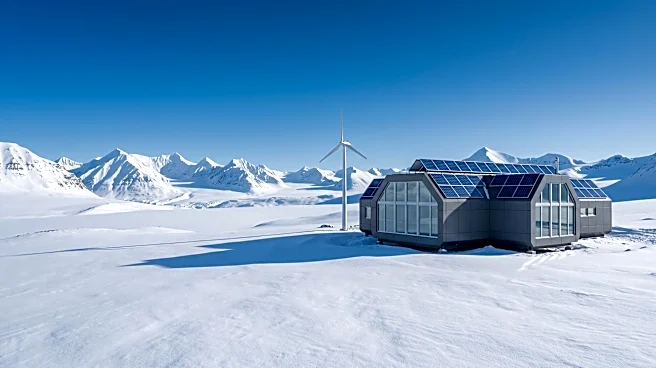
initiative, leading an international consortium of 11 institutions from six countries: Italy, Norway, Denmark, Finland, Poland, and France. The project seeks to significantly reduce the environmental impact of scientific infrastructure in these fragile ecosystems. Key strategies include sustainable logistics, optimizing scientific field operations, and digitalizing research activities. This involves moving away from reliance on diesel generators by implementing local renewable energy production, advanced storage systems, and smart resource management. The project will establish demonstration sites in Svalbard, Norway, and Finland, focusing on solar and wind power to ensure year-round energy supply for research stations. Additionally, new infrastructure will be designed to maximize waste and wastewater reuse and enable remote operations through advanced digital connections.
Why It's Important?
The Arctic is experiencing rapid and intense effects of climate change, making understanding these transformations vital for predicting global impacts and informing political, environmental, and economic decisions. The SUSTAIN-ARCTIC project addresses the critical challenge of conducting research in these vulnerable environments without causing further deterioration. By developing climate-neutral research solutions, the initiative aims to set new standards for scientific exploration in polar regions, minimizing the carbon footprint of essential climate research. This is particularly important as the Arctic faces profound environmental, economic, and strategic changes, including geopolitical tensions and growing interest in its resources. The project's emphasis on collaboration with local communities and indigenous peoples also promotes responsible and inclusive research models, ensuring that scientific advancements benefit and respect the regions' inhabitants. The outcomes could influence future international research protocols and contribute to global efforts in sustainability and decarbonization.
What's Next?
The SUSTAIN-ARCTIC project will proceed with its three-year plan, focusing on developing and testing climate-neutral solutions at demonstration sites in Svalbard and Finland. A significant next step will be the drafting of a proposal to be presented at the Arctic Circle Assembly 2026, a major international forum for Arctic affairs. This presentation will aim to share the project's findings and advocate for broader adoption of sustainable research practices. Politecnico di Torino, as the coordinator, plans to organize a conference on Arctic issues in mid-October 2026 to discuss various research topics relevant to the Arctic, ranging from fundamental physics and chemistry to ecosystem research, the built environment, and the cultural preservation of local communities. Further research agreements are also being pursued, including a second ministerial mission to Nuuk, Greenland, in collaboration with the Danish government, to expand research initiatives in the region.
Beyond the Headlines
The SUSTAIN-ARCTIC project highlights a deeper ethical consideration within scientific research: the imperative to minimize harm to the very environments being studied. While the pursuit of knowledge about climate change in the Arctic is crucial, the methods employed can inadvertently exacerbate the problems. This initiative represents a shift towards a more conscientious approach, integrating sustainability directly into the research methodology. The project's focus on local renewable energy and waste management not only reduces environmental impact but also fosters self-sufficiency in remote locations, potentially offering models for broader application in other isolated communities. Furthermore, the emphasis on collaboration with indigenous peoples acknowledges their traditional knowledge and ensures that scientific endeavors are culturally sensitive and beneficial to those most directly affected by Arctic changes. This integrated approach could set a precedent for future international scientific collaborations, promoting a holistic view of environmental stewardship and community engagement.