







What's Happening?
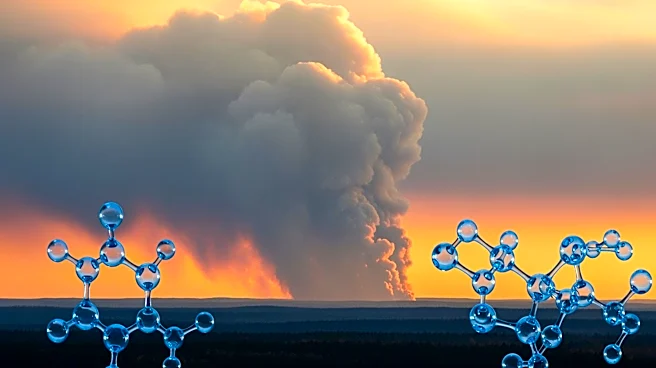
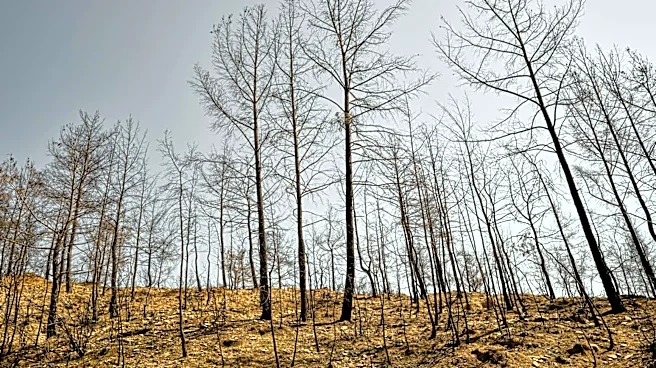
A study has revealed that toxic metal particles, specifically hexavalent chromium, remained in the air for months following the Eaton and Palisades fires in Los Angeles County. Researchers from UCLA and UC Davis found elevated levels of this carcinogen
in the burn areas, with particles small enough to penetrate the lungs and bloodstream. The contamination potentially exposed 3.4 million people from Santa Monica to Pasadena. The study highlights the long-term environmental and health impacts of wildfires, with hexavalent chromium being significantly more carcinogenic than diesel exhaust.
Why It's Important?
The findings underscore the need for comprehensive environmental monitoring and public health strategies in the aftermath of wildfires. The presence of hexavalent chromium poses serious health risks, including increased cancer rates, necessitating urgent attention from policymakers and health officials. The study also raises questions about the sources of contamination, which could include household items and fire retardants used during firefighting efforts.
What's Next?
Further investigation is required to pinpoint the exact sources of hexavalent chromium and to develop strategies to mitigate future risks. This may involve revisiting the composition of fire retardants and improving debris management practices. Public health advisories and community engagement will be crucial in addressing the potential long-term health impacts on affected populations.