


What's Happening?
NASA's analysis of data from the Galileo spacecraft has revealed the presence of ammonia-bearing compounds on the surface of Jupiter's moon Europa. The data, collected during Galileo's 11th orbit of Jupiter in 1997, was re-examined using advanced techniques.
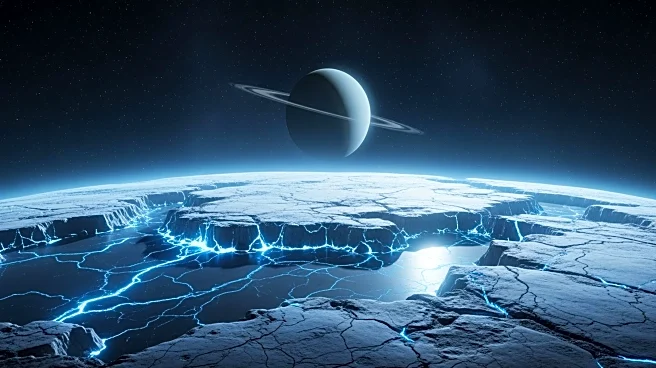
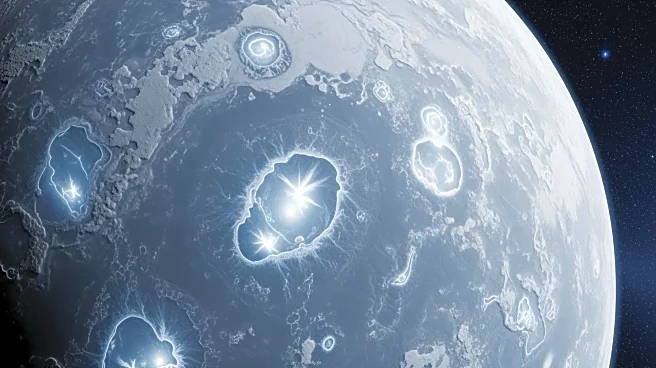
The findings suggest that these compounds are located near surface fractures, possibly indicating cryo-volcanic activity that brings liquid water from Europa's subsurface ocean to the surface. The discovery was made using the Near-Infrared Mapping Spectrometer (NIMS) instrument, which detected ammonia in specific regions of Europa's icy crust.
Why It's Important?
The detection of ammonia-bearing compounds on Europa is significant because it supports the hypothesis that the moon may have a subsurface ocean capable of supporting life. Ammonia can act as an antifreeze, lowering the freezing point of water and potentially creating a more habitable environment beneath the ice. This discovery adds to the growing body of evidence that Europa is one of the most promising places in the solar system to search for signs of extraterrestrial life. Understanding the chemical composition of Europa's surface and subsurface is crucial for future missions aimed at exploring the moon's potential habitability.
What's Next?
Future missions, such as NASA's Europa Clipper, are planned to further investigate Europa's surface and subsurface ocean. These missions will aim to gather more detailed data on the moon's composition, geology, and potential for life. The continued study of Europa's surface features and chemical makeup will help scientists prepare for these missions and refine their objectives. The findings from the Galileo data analysis will inform the design and instrumentation of future spacecraft sent to explore Europa.