







What's Happening?
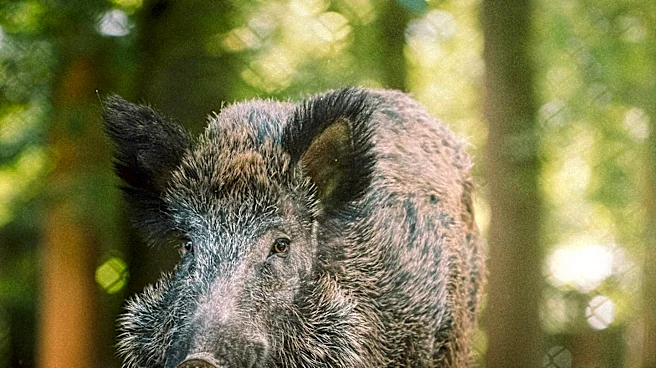
The U.S. Department of Agriculture (USDA) has announced a $35 million funding initiative aimed at reducing the population of feral swine, which are responsible for significant agricultural damage across the United States. This funding is part of a broader
effort to mitigate the estimated $3.4 billion in annual damages caused by these invasive animals. The initiative invites partners from Arkansas and 13 other states, primarily in the South, to apply for grants to support eradication and control projects. The USDA's Natural Resources Conservation Service and the Animal and Plant Health Inspection Service will oversee the program, which includes landowner assistance, restoration efforts, and training in swine trapping techniques. The funding builds on a previous $105 million investment in the Feral Swine Eradication and Control Pilot Program, which has already assisted over 6,700 landowners and covered nearly 9 million acres.
Why It's Important?
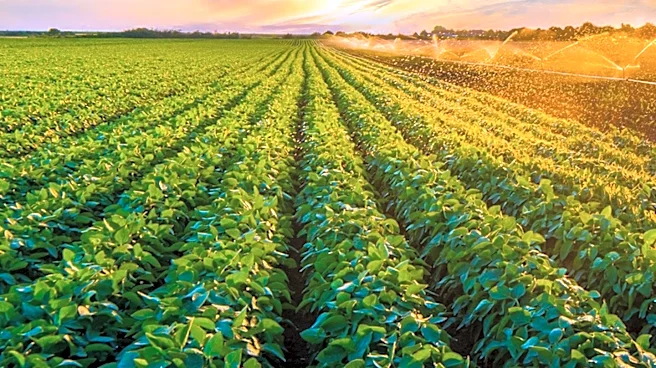
Feral swine pose a significant threat to U.S. agriculture, causing extensive damage to crops, fences, and pasturelands. In Arkansas alone, these animals are responsible for up to $41 million in damages annually. The USDA's funding initiative is crucial for protecting agricultural landscapes and reducing economic losses for farmers and ranchers. By supporting eradication efforts, the program aims to preserve the integrity of agricultural operations and prevent further environmental degradation. The initiative also highlights the importance of collaborative efforts between federal agencies and local partners in addressing invasive species challenges.
What's Next?
Applications for the USDA's feral swine reduction funding are open until September 21. Selected partners will engage in coordinated efforts with the USDA to implement eradication and control measures. The program will focus on providing landowner assistance, conducting training events, and enhancing trapping techniques. As the initiative progresses, stakeholders will monitor its impact on reducing feral swine populations and mitigating agricultural damage. The success of these efforts could lead to further investments and expanded programs to address invasive species across the country.