




What's Happening?
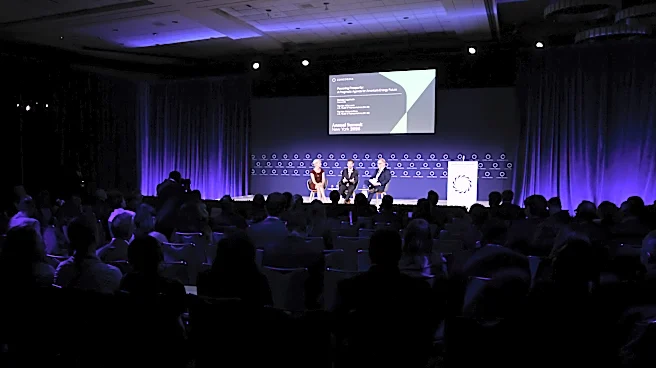
The Bipartisan Policy Center's Future of Organized Regional Markets (FORM) project is investigating the evolving role of regional grid organizations, specifically Regional Transmission Organizations (RTOs) and Independent System Operators (ISOs), in the United
States. These organizations, established approximately 25 years ago, serve over 220 million Americans and are critical in determining electricity generation methods, transmission projects, grid reliability, and consumer costs. The project highlights that after decades of stable or low demand growth, electricity demand is now increasing significantly, posing urgent questions about power costs, reliability, and grid investment. The FORM project aims to address key issues such as effective RTO governance, coordination among states, utilities, and market participants, and resource adequacy responsibilities to enhance clarity and accountability in policy choices and their cost implications.
Why It's Important?
The rising electricity demand across the U.S., a trend not seen in the lifetime of many RTOs, makes the FORM project's work particularly important. This surge in demand, driven by factors like economic growth and warmer temperatures, directly impacts the affordability and reliability of electricity for millions of Americans. RTOs and ISOs play a pivotal role in managing these complex systems, bringing together states with diverse energy policies to achieve economic and reliability benefits. Understanding how these organizations function and how they can adapt to future needs is crucial for maintaining a stable and affordable energy supply. The project's focus on governance, coordination, and resource adequacy will help policymakers and stakeholders navigate the challenges of grid modernization and ensure that the U.S. electric system can meet future demands effectively while balancing state-specific preferences for energy emissions profiles.
What's Next?
The Bipartisan Policy Center's FORM project will continue to explore critical questions related to the U.S. electric system. This ongoing research is expected to produce insights and recommendations that can inform policy decisions regarding RTO governance structures, inter-state coordination, and resource adequacy responsibilities. The project's findings will likely be utilized by policymakers, utilities, and other market participants to develop strategies for managing increasing electricity demand and ensuring grid reliability. As the energy landscape continues to evolve with new technologies and changing consumption patterns, the work of the FORM project will be instrumental in shaping the future of organized regional markets and the broader U.S. electric system. The center's publications, such as issue briefs and explainers, will continue to provide valuable information to stakeholders.
Beyond the Headlines
The challenges identified by the FORM project underscore the intricate balance required to manage a modern energy grid. The tension between increasing demand, affordability concerns, and diverse state-level energy policies highlights the need for robust and adaptable regulatory frameworks. The project's emphasis on effective governance and coordination points to the inherent complexities of managing a regional system that spans multiple jurisdictions with varying priorities. This situation also brings to light the broader implications of energy policy on economic development and environmental sustainability. As the U.S. transitions towards a cleaner energy future, the ability of RTOs and ISOs to integrate new technologies, manage fluctuating demand, and ensure equitable access to reliable power will be paramount. The project's work could influence long-term strategies for grid resilience and the integration of renewable energy sources.