






What's Happening?
Researchers from Thomas Jefferson University and the University of Maryland School of Medicine have reported promising results from the first human clinical trial of LASSARAB, an experimental vaccine designed to protect against both Lassa fever and rabies.
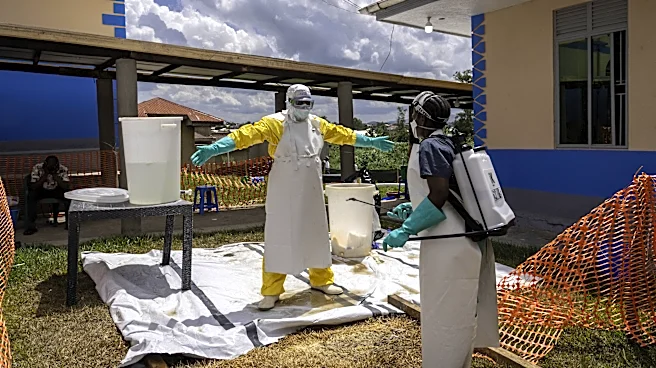
Published in Nature Medicine, the study indicates that the vaccine was well tolerated and induced strong immune responses in healthy adult volunteers. Lassa fever is a severe hemorrhagic disease endemic to parts of West Africa, causing significant morbidity and mortality. The LASSARAB vaccine uses an inactivated rabies virus vector to express the Lassa virus glycoprotein complex, leveraging the rabies vaccine's established safety and distribution networks. In a randomized Phase 1 trial, 54 adults received varying doses of LASSARAB or a licensed rabies vaccine as a control. The vaccine demonstrated a robust immune response, with all recipients developing Lassa virus-specific antibodies and achieving protective levels of rabies virus-neutralizing antibodies.
Why It's Important?
The development of LASSARAB is significant as it addresses two major global health threats with a single vaccine, potentially improving public health outcomes in regions where both Lassa fever and rabies are endemic. The dual-purpose vaccine could streamline vaccination efforts, reduce costs, and enhance accessibility in resource-limited settings. The successful trial results also highlight the potential of rabies-vectored platforms for developing vaccines against other infectious diseases. If further studies confirm its efficacy and safety, LASSARAB could become a critical tool in combating these diseases, reducing the burden on healthcare systems and improving quality of life in affected regions.
What's Next?
The researchers emphasize that this was an early-stage trial focused on safety and immune response, not efficacy. Further studies, including larger trials in Lassa fever-endemic populations, are necessary to assess the vaccine's long-term protection and real-world effectiveness. Continued clinical development of LASSARAB is anticipated, with the potential for it to become a next-generation vaccine offering dual protection. The outcomes of these future studies will determine the vaccine's role in global health strategies and its potential approval for widespread use.