







What's Happening?
A proposal by U.S. Rep. Tom Tiffany, a Republican from Minocqua, to redesignate the Apostle Islands National Lakeshore in Wisconsin as the Apostle Islands National Park and Preserve, is encountering significant skepticism and opposition from local communities
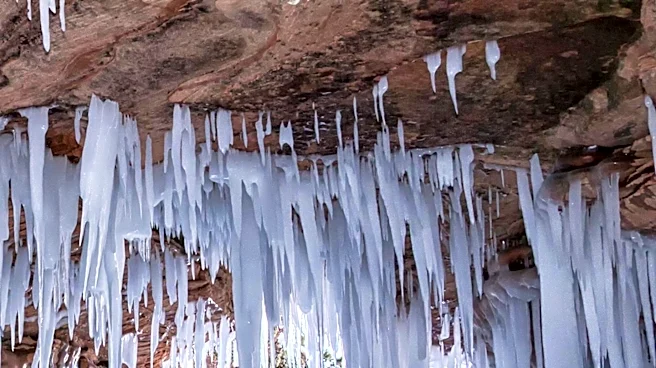
and Lake Superior tribes. The Apostle Islands, known for their sandstone cliffs and honeycomb caves, attract hundreds of thousands of tourists annually. Tiffany initially introduced the bill two years ago and reintroduced it last fall, arguing that elevating the islands' status would increase tourism and economic impact. However, local officials, including Bayfield Mayor Lyn Cornelius, and tribal leaders like Nicole Boyd, chairwoman of the Red Cliff Band of Lake Superior Chippewa, express concerns about the potential strain on infrastructure, emergency services, and the relaxed atmosphere of the area. They also criticize the lack of local consultation in the proposal's development. The Congressional Budget Office estimates the redesignation would cost less than $500,000 over five years for signage and displays, with no change in ownership or management, and a national preserve designation for Sand Island to protect hunting and tribal treaty rights.
Why It's Important?
This proposal highlights a broader tension between economic development driven by increased tourism and the preservation of local community character and environmental resources. While proponents like Tiffany suggest a national park designation would boost the regional economy, potentially doubling its impact, opponents fear that an influx of visitors would overwhelm existing infrastructure, which is already strained. Bayfield, with a population of 600, can swell to 3,000 daily during peak season, and concerns include increased traffic, trash, and stress on volunteer-based emergency services. The debate also underscores issues of tribal sovereignty and consultation, as tribal leaders argue that their treaty rights and cultural heritage are at risk, and they were not adequately consulted. The situation reflects a national pattern where redesignations of protected areas, such as the Indiana Dunes, have led to significant increases in visitors and spending, but also to challenges in managing the associated impacts on local communities and the environment, especially given budget cuts to the National Park Service.
What's Next?
No action has been taken on Tiffany's bill since February, though it has been included in the House appropriations bill. Democrats attempted to remove such policy provisions from the appropriations bill but were unsuccessful. Neither bill has been brought before the full House. With Tiffany not seeking re-election to Congress as he runs for Wisconsin governor, the future of the proposal is uncertain. His Democratic opponent for governor, Milwaukee County Executive David Crowley, believes the proposal should not be forced on Wisconsinites without their input. Michael Alfonso, the GOP candidate to succeed Tiffany, has stated he looks forward to hearing from local officials, business owners, and tribal nations. Fred Clark, Alfonso's Democratic opponent, opposes the proposal, citing concerns about overcrowding and lack of resources. The National Park Service recommends feasibility studies for potential new designations, though Congress is not required to request one.
Beyond the Headlines
The debate over the Apostle Islands' designation extends beyond economic and environmental concerns to touch upon the philosophical question of how best to manage and preserve natural treasures. The differing views reflect a fundamental conflict between maximizing public access and tourism revenue versus maintaining the ecological integrity and local cultural fabric of a region. The historical context of the National Park Service facing budget cuts and staffing reductions under the Trump administration adds another layer of complexity, raising questions about the agency's capacity to manage increased visitor numbers effectively. The opposition from local communities and tribal nations also highlights the importance of local self-determination and the need for genuine, inclusive consultation processes when federal policies impact regional areas. This case could set a precedent for how future national park designations are approached, emphasizing the need for comprehensive impact assessments and robust community engagement to ensure sustainable development and preservation.