






What's Happening?
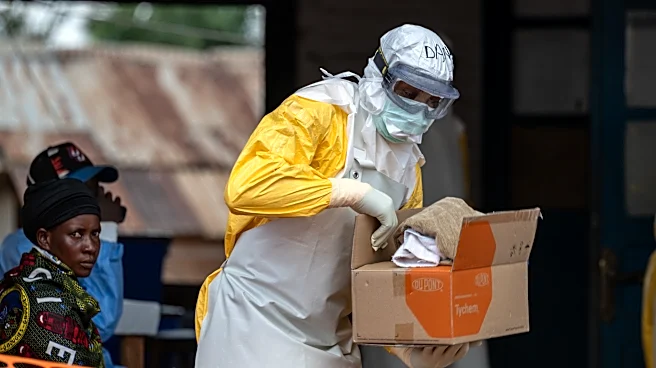
Dr. Peter Stafford, an American doctor, has been discharged from Berlin's Charité hospital after receiving treatment for Ebola. Stafford contracted the virus while working with a missionary group in the Democratic Republic of the Congo. The Charité hospital,
known for its specialized isolation ward, provided Stafford with experimental treatments that contributed to his recovery. The hospital's director of infectious diseases, Leif Erik Sander, described the treatment as a significant therapeutic success. Stafford expressed gratitude for the care he received and highlighted the disparity in healthcare access between Germany and the Congo. The U.S. had reportedly refused Stafford's return during his illness, and it remains uncertain who will cover his medical expenses.
Why It's Important?
The successful treatment of Dr. Stafford underscores the critical role of advanced medical facilities and experimental treatments in combating infectious diseases like Ebola. This case highlights the challenges faced by healthcare systems in less developed regions, such as the Democratic Republic of the Congo, where access to such care is limited. The situation also raises questions about international healthcare policies and the responsibilities of countries in supporting their citizens abroad. The refusal of the U.S. to allow Stafford's return during his illness may prompt discussions on the protocols for handling similar cases in the future.
What's Next?
It is unclear whether Dr. Stafford and his family will return to the Congo, where he was working before contracting Ebola. The decision may depend on various factors, including health considerations and logistical arrangements. Additionally, the question of who will bear the cost of Stafford's medical treatment remains unresolved. This situation may lead to further discussions on international healthcare responsibilities and the support systems available for expatriates working in high-risk areas.