






What's Happening?
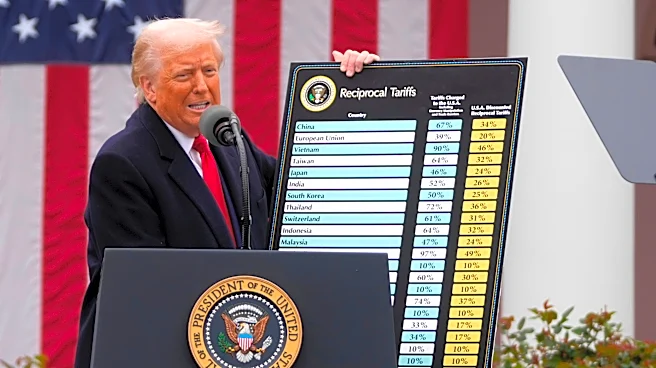
The U.S. government, under President Trump's direction, has announced new tariffs on 60 nations, targeting goods produced with forced labor. These tariffs, ranging from 10% to 12.5%, aim to generate revenue to address the national debt. However, the Committee
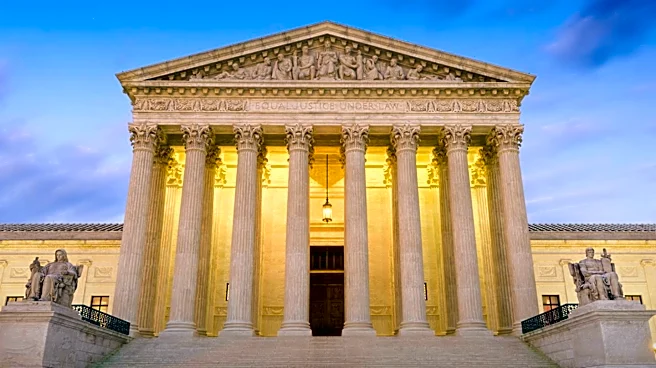
for a Responsible Federal Budget (CRFB) reports that these measures will still leave a 40% shortfall in the intended revenue for debt reduction. The tariffs are expected to generate $950 billion by 2036, but this falls short of the $1.7 trillion needed to offset previous revenue losses due to a Supreme Court ruling. The CRFB suggests that additional tariffs or other revenue measures will be necessary to meet budgetary goals.
Why It's Important?
The implementation of these tariffs reflects ongoing efforts by the Trump administration to address the U.S. national debt, which stands at $39 trillion. The shortfall in expected revenue highlights the challenges in balancing trade policy with fiscal objectives. The tariffs could impact international trade relations and domestic industries reliant on imports. The situation underscores the complexity of using trade policy as a tool for fiscal management and the potential need for broader economic measures to achieve debt reduction goals.
What's Next?
The administration may need to explore additional tariffs or alternative revenue sources to fully address the national debt. Legal challenges to the tariffs could also arise, potentially affecting their longevity and impact. The outcome of these measures will influence U.S. economic policy and international trade dynamics. Stakeholders, including businesses and trade partners, will be closely monitoring developments and potential adjustments to the tariff strategy.