






What's Happening?
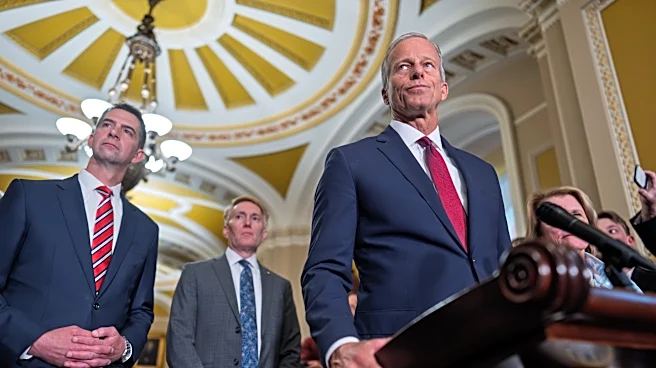
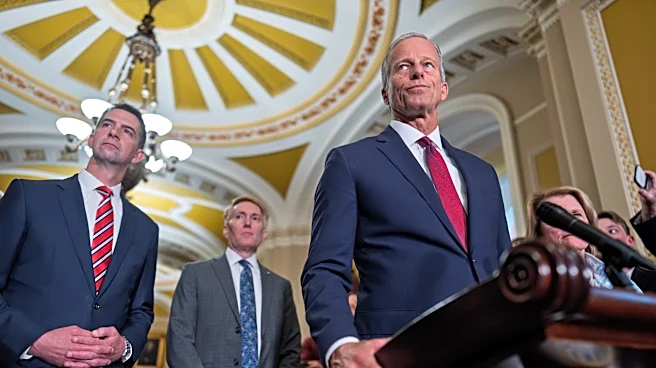
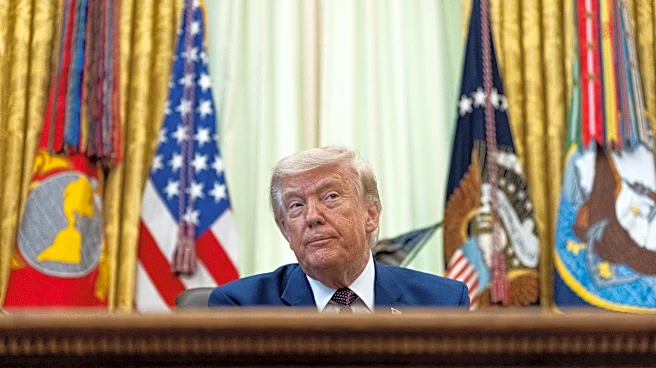
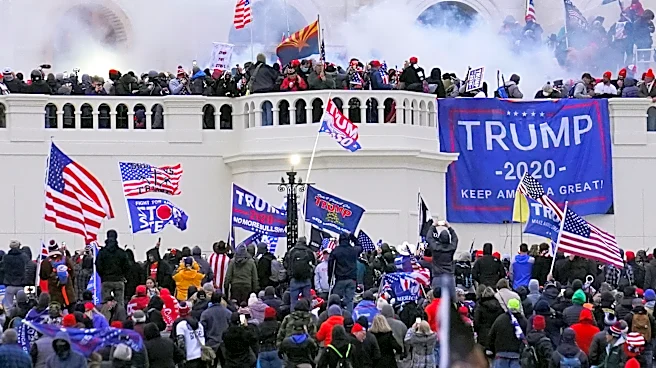
The Senate has officially rejected two major funding proposals from President Trump in the upcoming budget reconciliation bill. These proposals included a $1 billion allocation for constructing a ballroom on the White House grounds and a $1.776 billion 'weaponization
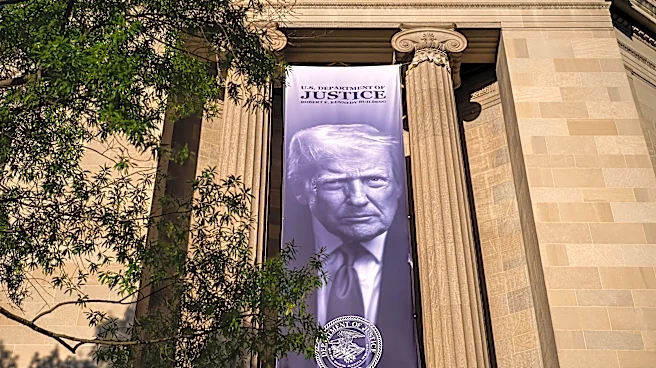
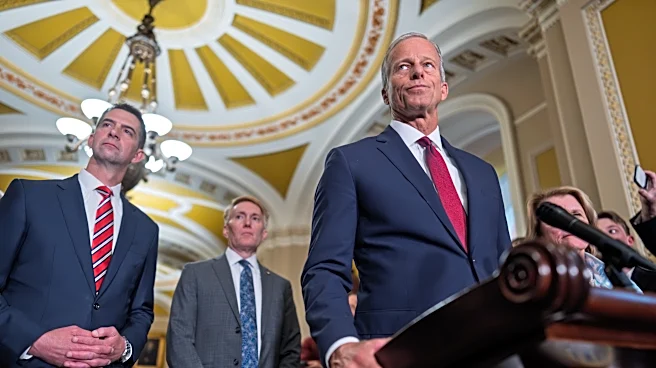
fund' intended to provide payouts to individuals prosecuted by the Department of Justice under Democratic administrations. The latter proposal was criticized as a 'slush fund' for Trump's allies and convicted January 6 rioters. Senate Republicans, facing internal opposition, removed these items from the bill text after a contentious meeting with Acting Attorney General Todd Blanche. Despite the White House's retreat, President Trump remains adamant about implementing the fund, expressing his intentions in a podcast interview.
Why It's Important?
The Senate's decision to exclude President Trump's funding proposals from the reconciliation bill highlights significant political tensions within the Republican Party. The rejection of the 'weaponization fund' reflects concerns about potential misuse of federal funds to benefit political allies and individuals involved in the January 6 Capitol riot. This move underscores the Senate's commitment to maintaining fiscal responsibility and avoiding controversial allocations that could undermine public trust. The decision also impacts the broader political landscape, as it signals a shift in Republican priorities and a willingness to distance themselves from contentious proposals associated with President Trump.
What's Next?
The Senate will continue to focus on the reconciliation bill, with efforts to secure funding for Immigration and Customs Enforcement (ICE) and Customs and Border Protection (CBP) through 2029. Republican senators, including Thom Tillis and John Cornyn, have expressed the need for language in the bill to restrict the White House from implementing the 'slush fund.' The reconciliation process will require careful negotiation to ensure the bill's passage, with Vice President JD Vance's tiebreaker vote potentially playing a crucial role. The Senate's actions may lead to further political debates and adjustments in the reconciliation package.