



What's Happening?
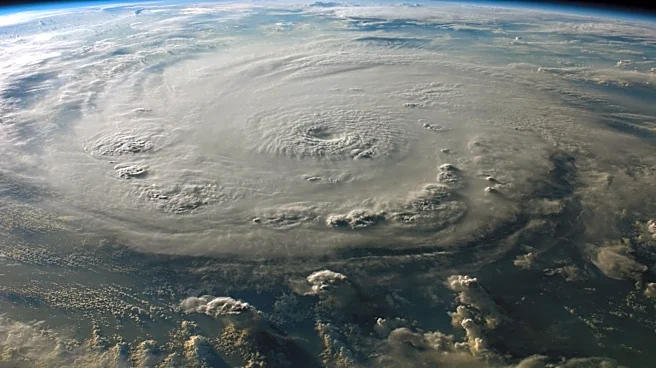
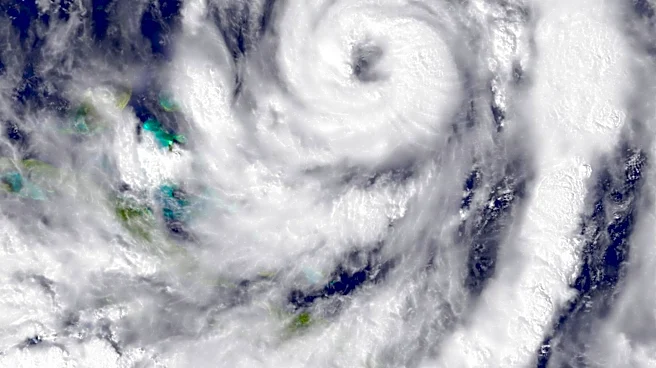
The National Hurricane Center has indicated the potential for tropical development in the eastern Atlantic Ocean in the coming week. This development may occur over 1,000 miles east of the Lesser Antilles, originating from a tropical wave expected to
move off the coast of Africa. However, any system that forms will face significant challenges due to strong wind shear, a condition exacerbated by the intensifying El Niño. Wind shear can disrupt tropical systems, preventing them from developing into more severe storms. Additionally, dry air in the region poses another obstacle to the formation and sustainability of tropical systems.
Why It's Important?
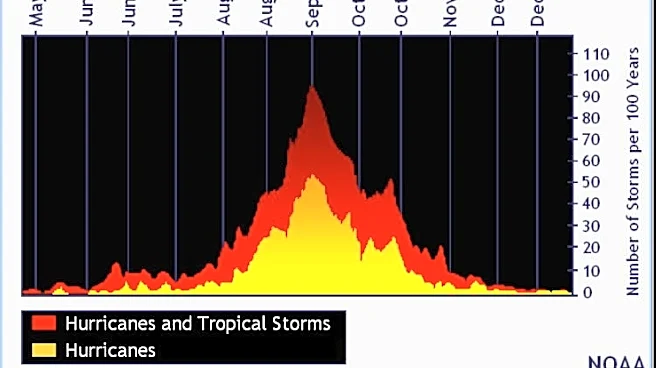
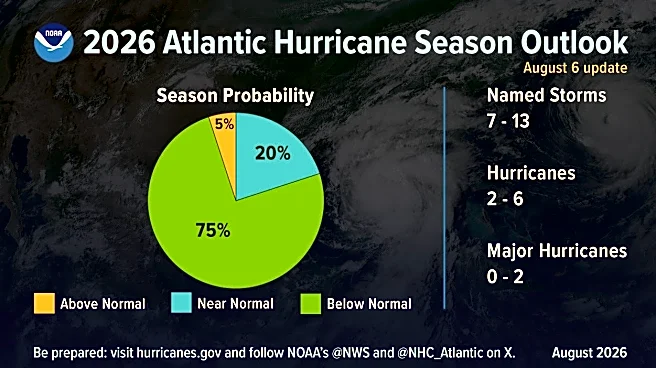
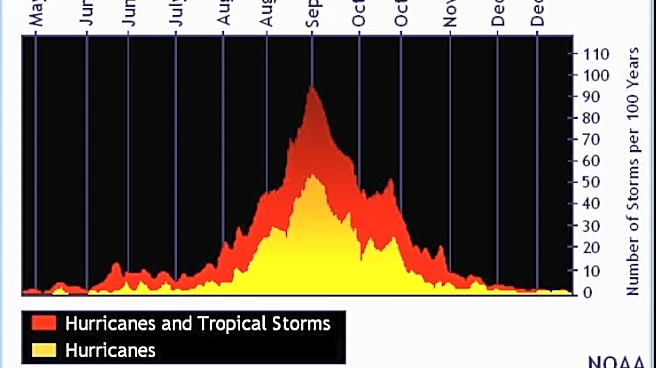
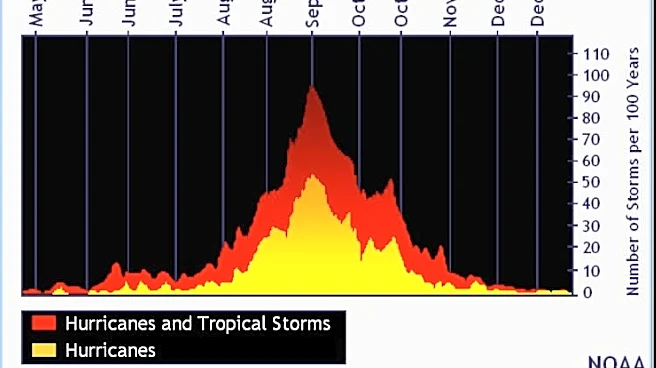
The potential for tropical development in the Atlantic highlights the ongoing influence of El Niño on weather patterns, particularly its impact on hurricane activity. While El Niño typically suppresses hurricane formation in the Atlantic by increasing wind shear, the possibility of development underscores the need for vigilance during hurricane season. For regions like the Lesser Antilles, understanding these dynamics is crucial for preparedness and risk management. The situation serves as a reminder of the complex interactions between climate phenomena and regional weather, affecting disaster readiness and response strategies.
What's Next?
As the tropical wave progresses, meteorologists will closely monitor its development and potential impacts. While the immediate threat to the mainland U.S. is minimal, interests in the Lesser Antilles should stay informed about forecast updates. The ongoing hurricane season, influenced by El Niño, may still present challenges, necessitating preparedness measures. Continued research and monitoring will be essential in understanding the evolving climate conditions and their implications for hurricane activity.