

What's Happening?
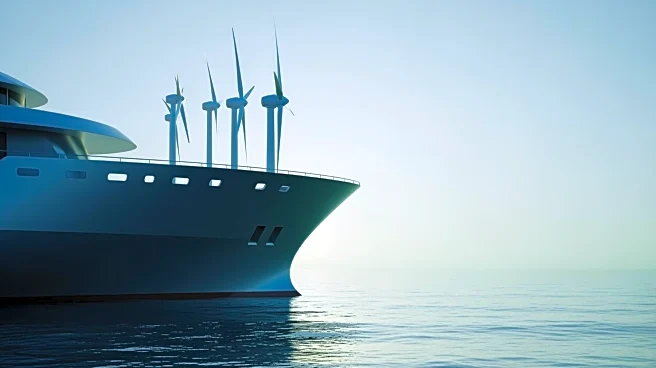
GustoMSC, a subsidiary of NOV, has been awarded a contract to design and supply critical equipment for a new wind turbine installation vessel (WTIV) for Hanwha Ocean. The vessel, based on the GustoMSC NG-16000X design, is scheduled for delivery in the second
quarter of 2028. This will be the fourth vessel of its kind, following an initial U.S.-built unit and two others currently under construction for Cadeler at Hanwha Ocean. The NG-16000X design is tailored to support Korea's offshore wind energy goals, featuring enhanced lifting and carrying capacities, longer legs for operations in deeper waters, and preparation for alternative fuels like liquefied natural gas and ammonia. The vessel will also include a GustoMSC Rack & Pinion jacking system with regenerative power capability and a 2,600-ton leg-encircling crane to meet future offshore wind installation needs.
Why It's Important?
This development is significant as it underscores the growing emphasis on renewable energy infrastructure, particularly in the offshore wind sector. The contract highlights Hanwha Ocean's strategic ambition to lead in the Korean offshore wind market, aligning with the Korean government's goal of developing 25 GW of wind energy by 2035. The collaboration between GustoMSC and Hanwha Ocean not only strengthens their partnership but also positions both companies to capitalize on broader offshore wind and clean energy opportunities globally. The advanced capabilities of the NG-16000X design, including its environmental considerations and operational efficiencies, reflect a shift towards more sustainable and innovative energy solutions.
What's Next?
As the project progresses, the focus will likely be on the construction and deployment of the vessel, with potential implications for the global offshore wind market. Stakeholders in the renewable energy sector will be watching closely to see how this project influences future offshore wind installations and the adoption of alternative fuels in maritime operations. The successful implementation of this vessel could set a precedent for similar projects worldwide, encouraging further investment in renewable energy infrastructure.