


What's Happening?
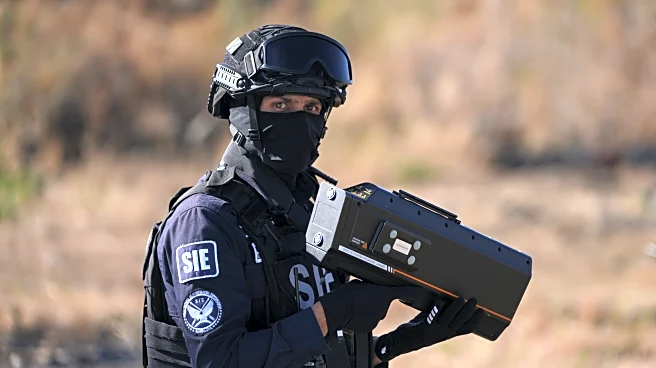
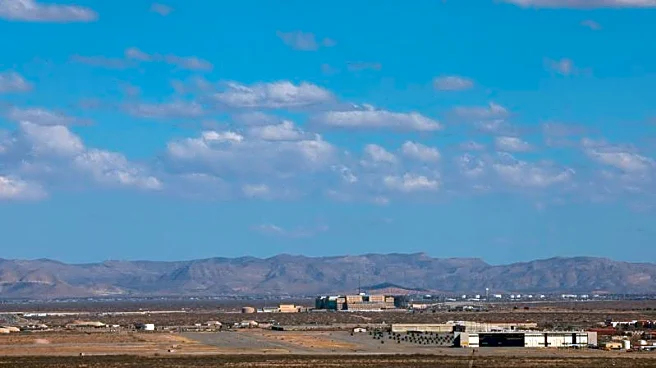
The Federal Aviation Administration (FAA) temporarily closed the airspace around El Paso due to the U.S. military's use of a high-energy laser system intended to counter drones. This action was taken after the Pentagon authorized Customs and Border Protection
to deploy the laser against what was believed to be a drone operated by a Mexican drug cartel. However, it was later revealed that the target was a mylar party balloon, not a drone. The incident has highlighted a lack of coordination between the FAA and the Pentagon, as the airspace was closed without notifying local officials or Congress members, leading to significant disruption. El Paso Mayor Renard Johnson criticized the decision, noting that it caused chaos, including the diversion of medical evacuation flights. U.S. Rep. Veronica Escobar expressed skepticism about the official explanation, stating that the information provided by the administration did not align with what Congress was told.
Why It's Important?
This incident underscores the challenges and potential risks associated with the use of advanced military technology in civilian areas. The lack of coordination between federal agencies like the FAA and the Pentagon can lead to significant disruptions, as seen in El Paso. The closure of airspace over a major city without proper communication can have serious implications for public safety and emergency services. Additionally, the incident raises questions about the protocols for deploying military technology in domestic settings and the need for clear communication channels between federal and local authorities. The situation also highlights the ongoing concerns about cross-border drone activity and the measures taken to address potential threats from drug cartels.
What's Next?
In the aftermath of the incident, there is likely to be increased scrutiny on the coordination between the FAA and the Pentagon regarding airspace management and the use of military technology. Congressional leaders, including Senator Ted Cruz, are seeking more information about the decision-making process and interagency communication. This could lead to hearings or investigations to ensure that similar incidents do not occur in the future. Additionally, there may be discussions about establishing clearer guidelines and protocols for the use of military technology in civilian areas, particularly near international borders.