







What's Happening?
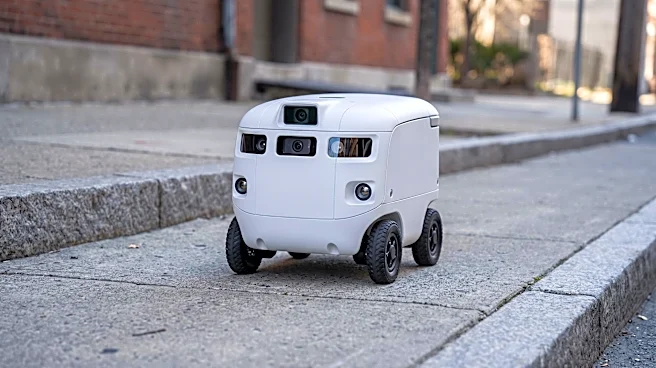
A retired University of Pennsylvania communications professor, Carolyn Marvin, was arrested in Philadelphia for repeatedly blocking delivery robots. The 78-year-old received a disorderly conduct citation after standing in the path of a robot during a protest
concerning the use of public sidewalks. Marvin had previously engaged in similar actions, stopping robots for several minutes at a time to raise concerns about job displacement for low-income delivery workers, pedestrian safety, and privacy issues related to the robots' cameras. Police stated they repeatedly instructed her to move before issuing the citation when she refused to comply. Uber Eats launched its robot delivery service in Philadelphia in March.
Why It's Important?
This incident highlights growing tensions surrounding the integration of autonomous delivery technology into urban environments in the U.S. The protest by Professor Marvin underscores public concerns about the societal impact of automation, particularly regarding potential job losses and the privatization of public spaces. The arrest also brings to light legal ambiguities and enforcement challenges when individuals protest against automated systems. This event could prompt further discussions and potentially lead to policy debates at local and state levels regarding the regulation of delivery robots, their operational guidelines, and their impact on urban infrastructure and employment.
What's Next?
Professor Marvin has indicated her intention to continue her protest, viewing her actions as part of a broader argument about who controls public space. This suggests that similar confrontations between citizens and automated delivery services may occur in Philadelphia and potentially other U.S. cities. The incident could also lead to increased scrutiny of the legal framework governing the operation of delivery robots on public sidewalks. City officials and technology companies might face pressure to address public concerns regarding job displacement, safety, and privacy, potentially leading to new regulations or community engagement initiatives to mitigate these issues.
Beyond the Headlines
The protest by Professor Marvin delves into deeper ethical and philosophical questions about the role of technology in society and the definition of public space. Her actions, rooted in a history of civil rights and anti-war activism, frame the issue as a struggle against corporate encroachment on communal resources. This incident could spark broader conversations about the balance between technological advancement and social equity, and how communities can assert control over their shared environments in an increasingly automated world. It also raises questions about the legal distinction between obstructing a person versus a machine, and how existing laws adapt to new technological realities.