






What's Happening?
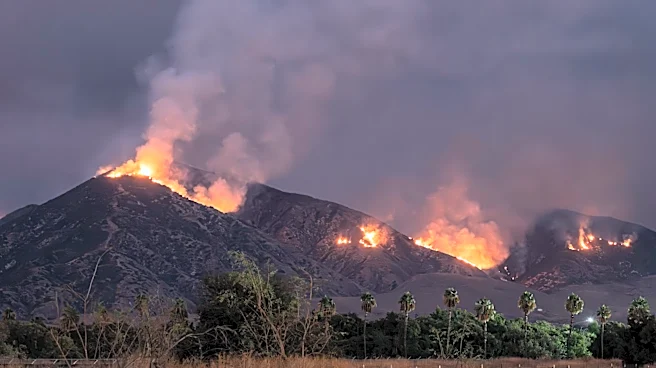
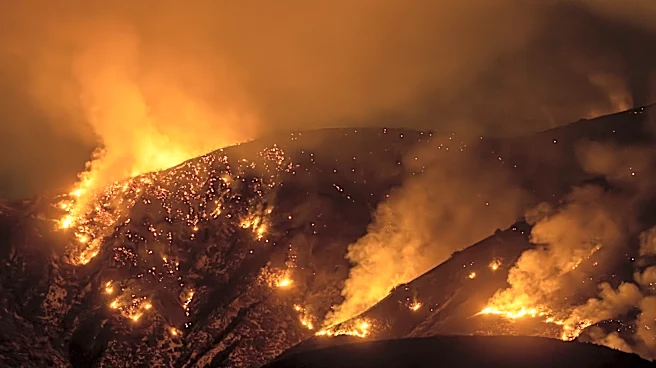
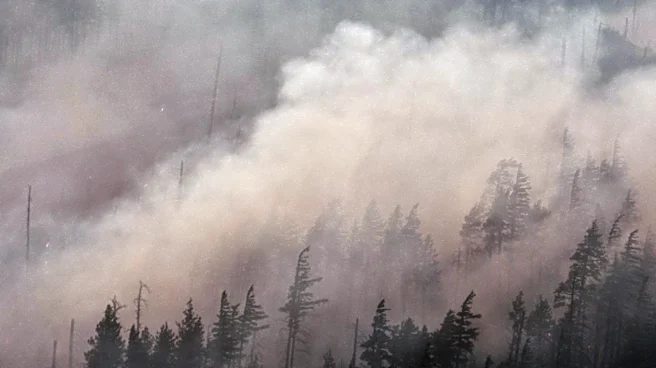
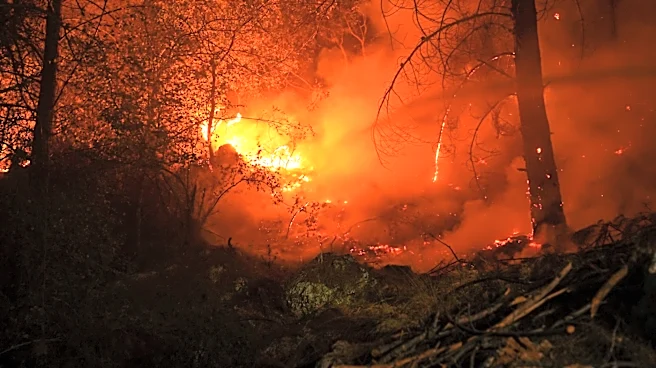
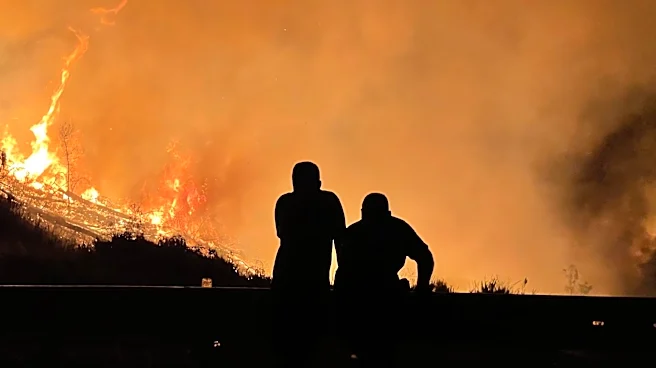
The Summit Fire, which ignited near Jesus Canyon Road and East Avenue Z in the Antelope Valley, has rapidly expanded to over 2,600 acres, prompting evacuation orders and warnings. The fire, reported around 12:50 p.m. on Friday, initially burned through
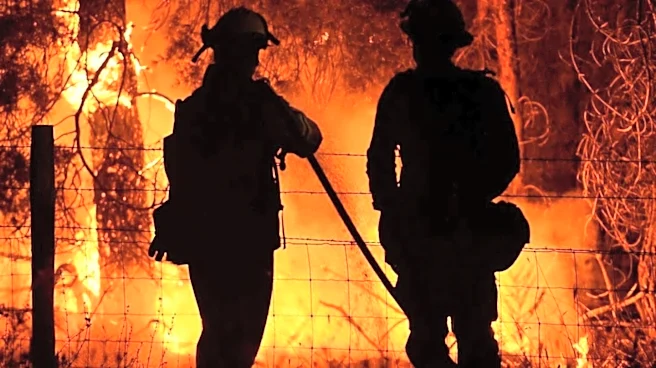
eight acres of brush before spreading into the Angeles National Forest. Firefighters have launched a significant air and ground assault to contain the blaze, which remains at 0% containment. The fire has affected sparsely populated areas near Llano and Piñon Hills and is advancing toward San Bernardino County. An evacuation shelter has been set up at the Antelope Valley Family YMCA in Lancaster, and an animal shelter is available in Palmdale. The South Coast Air Quality Management District has issued a smoke advisory, effective until Saturday evening. No injuries have been reported, but some outbuildings have been damaged or destroyed.
Why It's Important?
The rapid spread of the Summit Fire highlights the ongoing challenges of wildfire management in California, particularly during hot and dry conditions. The fire's proximity to populated areas and its potential to damage infrastructure and homes underscore the need for effective emergency response and evacuation planning. The incident also raises concerns about air quality, as smoke advisories have been issued, affecting public health. The fire's progression into the Angeles National Forest and toward San Bernardino County could have broader environmental impacts, threatening wildlife habitats and increasing the risk of further spread. The situation emphasizes the importance of resource allocation for firefighting efforts and the need for community preparedness in wildfire-prone regions.
What's Next?
Firefighting efforts will continue as crews work to establish containment lines and prevent the fire from spreading further into populated areas and the Angeles National Forest. Authorities will monitor weather conditions, as high temperatures and winds could exacerbate the fire's spread. Evacuation orders and warnings remain in effect, and residents are advised to stay informed through official channels. The South Coast Air Quality Management District will continue to assess air quality impacts, and additional advisories may be issued. The situation requires ongoing coordination between local, state, and federal agencies to manage resources and ensure public safety.