








What's Happening?
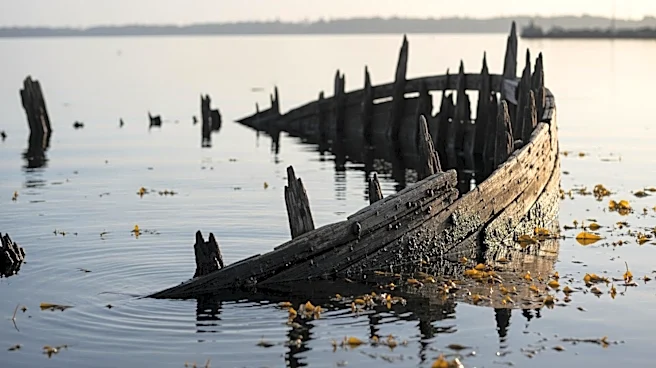
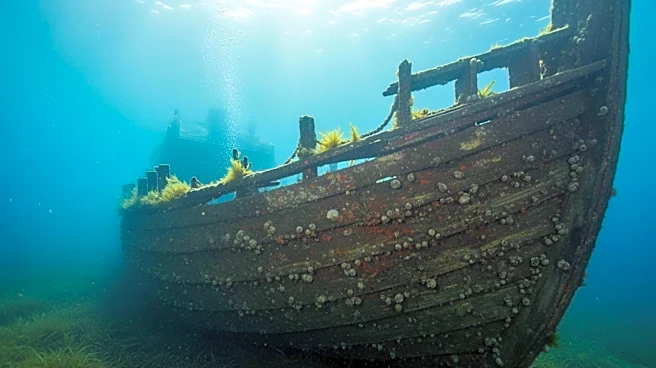
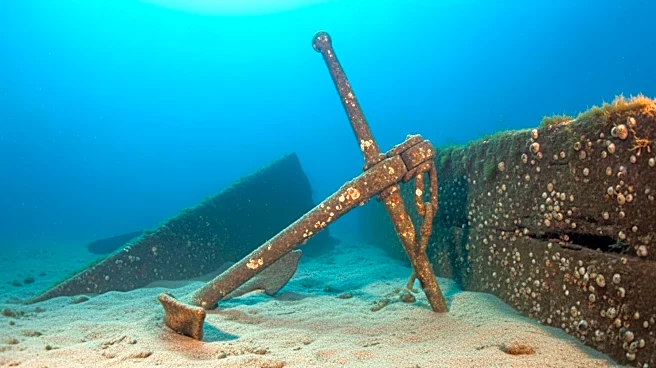
Marine archaeologists have uncovered the wreck of the Danish flagship Dannebroge, which sank during the 1801 Battle of Copenhagen. The discovery was made during pre-construction surveys for a waterfront expansion in Copenhagen. The Dannebroge caught fire
and exploded during the battle, killing over 50 crew members. The wreck, surrounded by cannonballs, had remained undiscovered for 225 years. The Battle of Copenhagen was a significant naval engagement led by Admiral Horatio Nelson, aiming to disrupt the League of Armed Neutrality and maintain British control over shipping lanes. The archaeological find provides new insights into the battle and its historical context.
Why It's Important?
The discovery of the Dannebroge offers a unique opportunity to study the Battle of Copenhagen, a pivotal event in naval history. It enhances understanding of 18th-century naval warfare and the geopolitical tensions between Britain and the League of Armed Neutrality. The archaeological exploration contributes to historical scholarship and may attract interest from historians and maritime enthusiasts. Additionally, the respectful treatment of the site as a war grave highlights ethical considerations in archaeology, emphasizing the importance of preserving historical artifacts and honoring those who perished.
What's Next?
The archaeological team will continue to excavate and analyze the wreckage, including human remains believed to be crew members. The findings will be documented and studied to provide further insights into the battle and ship construction of the era. The waterfront development project will proceed with consideration for the historical significance of the site. The discovery may lead to increased interest in maritime archaeology and potential exhibitions showcasing the artifacts recovered from the wreck.