
What's Happening?
Train drivers in Spain initiated a large-scale, nationwide strike on Tuesday, significantly disrupting rail services across the country. The industrial action, organized by the Sindicato Español de Maquinistas
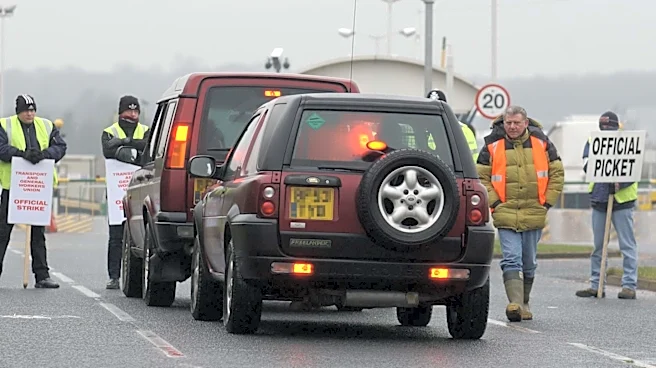
Ferroviarios (SEMAF), affects various Renfe Group services, including Cercanías (commuter trains), High-Speed, and Long-Distance routes. The primary demand of the striking drivers is the implementation of improved safety measures and the fulfillment of existing commitments regarding rail safety. This mobilization follows two significant high-speed rail accidents within the past year, which have heightened concerns among drivers and the public. Strikers gathered outside Atocha Railway Station in Madrid, displaying signs advocating for better train safety. The strike has led to widespread delays and cancellations, catching many travelers off guard and severely impacting their plans. SEMAF is specifically calling for concrete technical and operational measures, such as specific weather alerts for railways, enhanced High-Speed protection systems, and effective monitoring of temporary speed limitations.
Why It's Important?
This strike underscores critical concerns about rail safety within Spain's national transportation infrastructure. The demand for improved safety measures, particularly after two recent fatal high-speed rail accidents, highlights potential systemic issues that could affect public confidence in the rail network. For the Spanish economy, disruptions to rail services can have immediate negative impacts on tourism, business travel, and daily commutes, leading to economic losses. The strike also puts pressure on the Ministry of Transport and Renfe to address union demands, potentially leading to significant investments in safety upgrades and operational changes. The outcome of these negotiations could set precedents for labor relations and safety standards in other critical infrastructure sectors, emphasizing the importance of worker safety in high-risk environments. The increased road traffic due to the strike also points to broader logistical challenges and environmental considerations.
What's Next?
The Sindicato Español de Maquinistas Ferroviarios (SEMAF) has indicated that further strike days are under consideration if their demands are not met, with November 23 already scheduled for additional action. The union will continue to engage with the Ministry of Transport, but without a resolution, more widespread disruptions are likely. Authorities will need to balance maintaining essential services with addressing the legitimate safety concerns raised by the drivers. Travelers in Spain should anticipate continued disruptions to rail services and monitor official announcements from Renfe and SEMAF. The government faces pressure to negotiate a resolution that satisfies the unions' safety demands while minimizing further economic and social impact. The situation could also prompt a broader review of rail safety protocols and investment in infrastructure across Spain.
Beyond the Headlines
The Spanish train drivers' strike highlights a recurring tension between operational efficiency and worker safety, particularly in industries with inherent risks. Beyond the immediate demands for specific safety protocols, this action reflects a deeper societal expectation for robust safety standards in public services. The union's emphasis on concrete technical measures, such as weather alerts and centralized risk registers, points to the need for proactive, data-driven safety management rather than reactive responses to incidents. This situation could also spark a broader debate on the adequacy of regulatory oversight by bodies like the State Railway Safety Agency. Furthermore, the strike's impact on daily life and the economy underscores the critical role of essential workers and the potential leverage they hold when collective action is taken over fundamental issues like safety. The long-term implications could include increased public scrutiny of transportation safety, potentially influencing policy decisions and investment priorities in rail infrastructure across Europe.