






What's Happening?
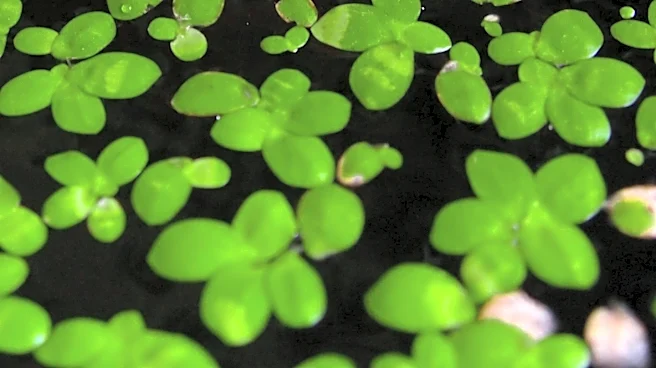
Scientists are currently investigating the aquatic fern Azolla for its significant capacity to absorb carbon dioxide from the atmosphere. This fast-growing plant can capture approximately 21,266 kg of CO2 per hectare annually, making it considerably more
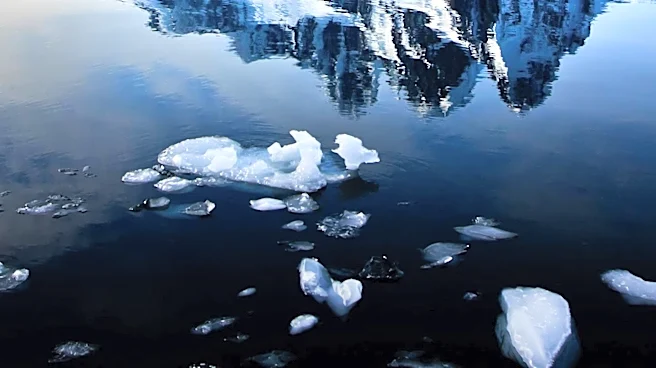
efficient than an equivalent area of the Amazon rainforest. Historically, around 50 million years ago, large Azolla blooms in the Arctic are thought to have played a crucial role in cooling the planet by reducing atmospheric carbon levels. Today, researchers are exploring various applications for Azolla, including its use in carbon capture technologies, sustainable agriculture, and water restoration efforts. The plant's natural ability to sequester large amounts of CO2 offers a promising avenue for addressing contemporary climate challenges.
Why It's Important?
The exploration of Azolla as a carbon capture solution holds significant importance for global climate policy and environmental sustainability. Its high efficiency in CO2 absorption could provide a natural, scalable method to mitigate greenhouse gas emissions, offering a potential tool in the fight against climate change. If successfully implemented, Azolla could contribute to reducing atmospheric carbon levels, thereby helping to stabilize global temperatures and prevent further ecological destabilization. This research could also lead to advancements in sustainable agricultural practices, potentially improving soil health and water quality. The economic implications are substantial, as effective carbon capture technologies could create new industries and jobs, while also reducing the long-term costs associated with climate-related disasters. However, it is crucial to consider that while Azolla captures carbon, its long-term sequestration depends on how its biomass is managed to prevent the re-release of CO2.
What's Next?
The next steps involve further scientific research and development to understand the full potential and limitations of Azolla for carbon capture and other environmental applications. This includes studying the optimal conditions for its growth, its long-term carbon sequestration capabilities, and the most effective methods for its deployment in various ecosystems. Researchers will likely focus on pilot projects to test Azolla's efficacy in different settings, such as industrial carbon capture systems, agricultural fields, and water bodies. Additionally, there will be efforts to develop sustainable harvesting and processing techniques for Azolla biomass to ensure that the captured carbon remains sequestered and does not re-enter the atmosphere. Policy discussions may also emerge regarding incentives and regulations to support the widespread adoption of Azolla-based solutions.
Beyond the Headlines
Beyond its immediate carbon capture potential, Azolla's re-emergence in scientific discourse highlights a broader shift towards nature-based solutions for environmental challenges. The historical precedent of Azolla blooms cooling the planet millions of years ago underscores the powerful, yet often overlooked, role of natural biological processes in regulating Earth's climate. This research encourages a deeper appreciation for biodiversity and the intricate ecological balances that sustain life. Ethically, the responsible deployment of Azolla requires careful consideration to avoid unintended ecological consequences, such as invasive species concerns or disruptions to existing aquatic ecosystems. Culturally, the story of Azolla could inspire a renewed focus on indigenous knowledge and traditional ecological practices that have long recognized the value of specific plants for environmental management. Ultimately, Azolla represents a compelling example of how looking to the past and understanding natural systems can provide innovative solutions for future sustainability.