




What's Happening?
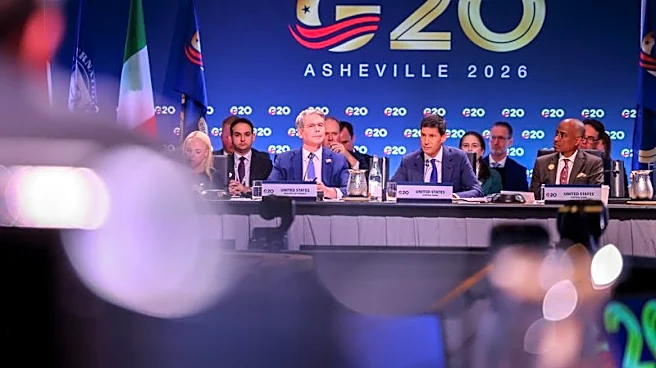
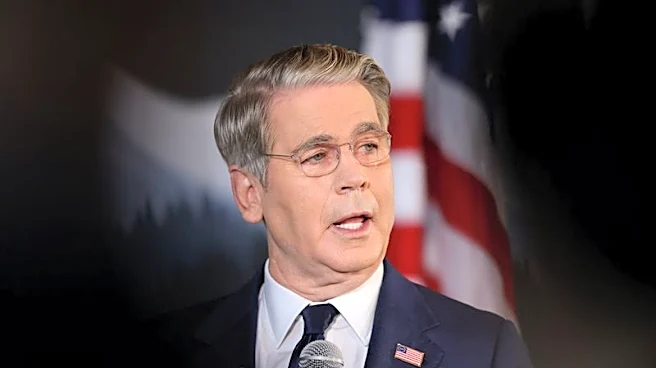
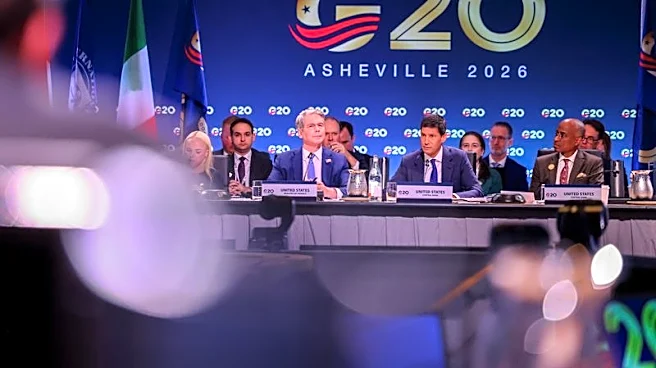
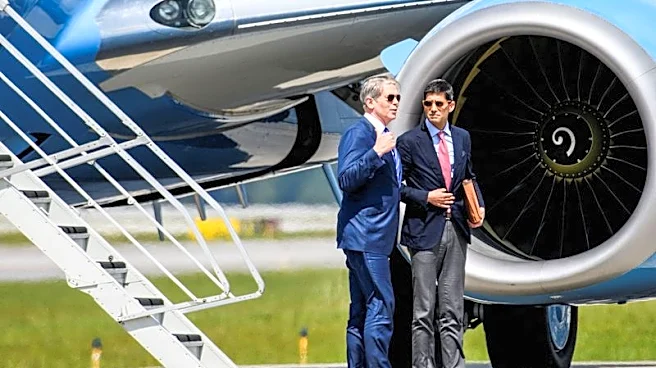
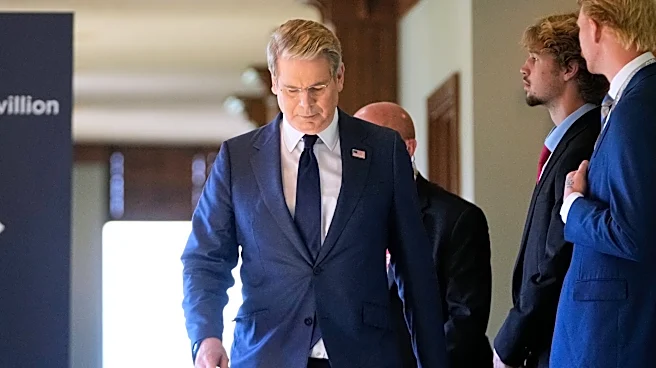
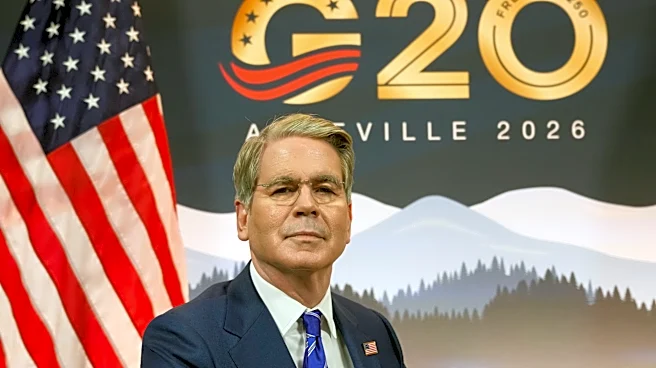
Treasury Secretary Scott Bessent announced that 19 of the G20 member countries have agreed to address the issue of 'cheap exports' that contribute to global economic imbalances. This consensus was reached during a two-day meeting of G20 finance ministers
in Asheville, N.C., though China dissented from the agreement. Bessent emphasized the significance of 19 nations acknowledging the problem, highlighting its 'enormity.' He noted that China is a primary source of these exports, which the Trump administration and many economists blame for trade imbalances, including China's large trade surplus and the U.S.'s substantial deficit. Bessent also previewed an upcoming meeting between President Trump and China's President Xi Jinping, where AI policy will be a discussion point. He reiterated his past warnings to other nations about the potential for Chinese goods to flood their markets due to U.S. tariffs, a prediction he believes has materialized.
Why It's Important?
This development is highly significant for U.S. economic policy and international trade relations. The agreement among 19 G20 nations to address 'cheap exports' signals a broad international concern that aligns with the Trump administration's long-standing criticisms of China's trade practices. China's dissent, however, underscores the persistent divisions on trade policy and the challenges in achieving a unified global approach. For the U.S., this consensus could strengthen its position in advocating for fairer trade practices and potentially lead to coordinated international pressure on China. The discussion of a new 7.5% tariff on Chinese imports, following an investigation into alleged excess industrial capacity and forced-labor regulations, indicates a continued aggressive stance by the U.S. on trade. This could impact U.S. consumers through potentially higher import costs and influence the competitiveness of domestic industries. The broader implications include potential shifts in global supply chains and increased trade tensions, affecting various economic sectors.
What's Next?
The upcoming meeting between President Trump and China's President Xi Jinping will be a critical juncture for U.S.-China trade relations, with AI policy also on the agenda. The U.S. is considering an additional 7.5% tariff on Chinese imports, which could escalate trade tensions if implemented. The G20's collective stance, despite China's dissent, may empower the U.S. to push for more stringent measures or to rally further international support for addressing trade imbalances. The ongoing debate about 'cheap exports' and trade surpluses will likely continue to shape global economic discussions and policy decisions. Stakeholders, including U.S. businesses and consumers, will closely monitor these developments for potential impacts on pricing, market access, and economic stability. The long-term trajectory of U.S.-China relations, particularly concerning trade and technology, will be heavily influenced by the outcomes of these high-level discussions and policy implementations.
Beyond the Headlines
The G20's focus on 'cheap exports' and China's role in global trade imbalances highlights a deeper philosophical divide in international economic policy. The U.S. and its allies often advocate for free and fair trade based on market principles, while China's state-backed industrial policies are frequently criticized for creating unfair competitive advantages. This divergence raises questions about the future of globalization and the potential for a more fragmented global economy. The discussion also touches upon the ethical dimensions of trade, particularly concerning allegations of forced labor and intellectual property theft, which are often intertwined with the 'cheap exports' narrative. The long-term implications could include a re-evaluation of international trade agreements, a push for greater supply chain resilience and diversification away from single-country dependencies, and a potential reshaping of global economic power dynamics. The inclusion of AI policy in the upcoming Trump-Xi meeting further underscores the growing intersection of economic, technological, and geopolitical competition.