






What's Happening?
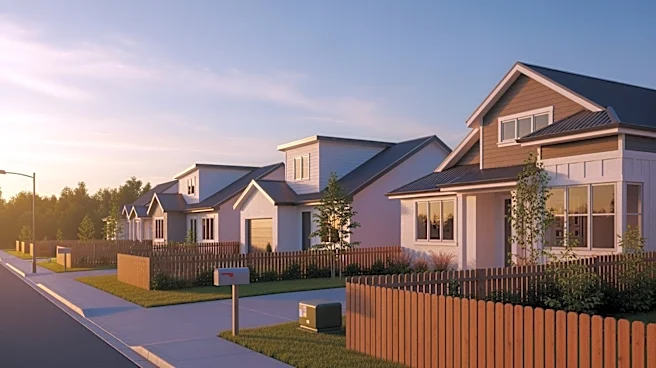
The Ivory Foundation has inaugurated a new affordable housing community named Innovation Park in Lehi, Utah. The development consists of 239 townhomes offered at the median income level, aiming to provide affordable housing amidst rising home prices.
The project, costing over $72 million, is part of a broader initiative to increase housing supply in response to high demand. At the ribbon-cutting ceremony, Governor Spencer Cox highlighted the importance of building more housing to meet demand and stabilize prices. Additionally, the foundation launched the Rippy Literacy Center, offering free reading and math classes for K-4 students. The initiative is part of a larger plan by Ivory Innovations, which includes seven more sites with similar affordable housing projects in Utah.
Why It's Important?
The opening of Innovation Park is significant as it addresses the critical issue of affordable housing in Utah, where home prices have surged by 122% since 2006. By providing homes at below-market rates, the project aims to alleviate the financial burden on families and attract growth in Lehi. The initiative also underscores the broader economic challenges faced by many U.S. cities, where housing affordability is a growing concern. The inclusion of the Rippy Literacy Center highlights the importance of educational support in community development, aiming to improve literacy rates among young students. This dual focus on housing and education reflects a comprehensive approach to community building, potentially serving as a model for other regions facing similar challenges.
What's Next?
Ivory Innovations plans to expand its affordable housing efforts with seven additional sites across Utah, including Draper and Magna. These projects will continue to target median income levels to ensure accessibility for more families. The partnership with Guerdon, a modular construction company, is expected to facilitate the rapid development of these projects, marking a significant advancement in Utah's housing infrastructure. As these projects progress, they may influence housing policies and inspire similar initiatives in other states. The ongoing demand for affordable housing and educational resources will likely drive further community-focused developments, potentially impacting local economies and social structures.