




What's Happening?
Officials from drainage districts across Clay, Dickinson, and Emmet Counties in Iowa have approved an agreement with Invenergy, the developer of the proposed Red Rock Wind Energy Center. This agreement addresses the impact of wind turbine construction
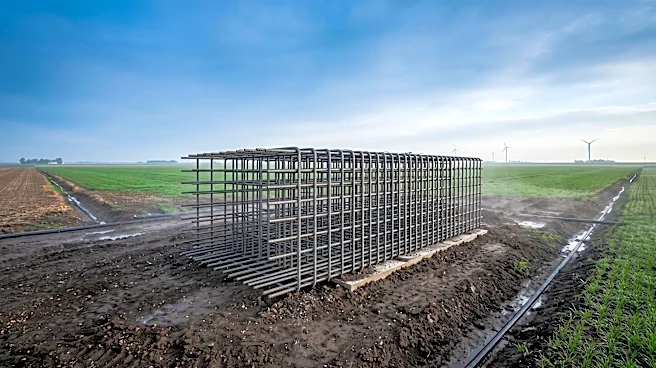
on existing infrastructure, such as ditches and tile lines within the drainage districts. Wind turbines require substantial, deep foundations, necessitating such agreements to protect local infrastructure. Invenergy plans to construct 51 wind turbines across Dickinson and Emmet Counties, while Clay County will host the project's grid connection and portions of its underground electrical lines. Manashree Padiyath of Invenergy stated that the company will cover administrative expenses and inspection costs related to the drainage district, emphasizing their commitment to being responsible developers and ensuring counties are compensated for any impacts to their facilities. Major construction for the Red Rock Wind Energy Center is slated to commence next year, with completion anticipated in late 2028 or 2029.
Why It's Important?
This agreement is significant for several reasons, primarily concerning the expansion of renewable energy infrastructure in the U.S. and its interaction with local agricultural and environmental systems. The approval ensures that the development of large-scale wind energy projects can proceed while mitigating potential negative impacts on critical drainage infrastructure vital for agricultural land. This sets a precedent for how future renewable energy projects might navigate similar challenges in other agricultural regions. For local communities, the agreement provides a framework for financial compensation and accountability from developers, ensuring that the costs associated with infrastructure protection and maintenance are not borne by taxpayers. It also highlights the increasing need for collaboration between energy developers and local authorities to facilitate the transition to renewable energy sources while safeguarding existing community assets and economic activities.
What's Next?
Following the approval of this agreement, major construction on the Red Rock Wind Energy Center is scheduled to begin next year. The project is expected to be completed in late 2028 or 2029. During this period, Invenergy will be responsible for covering administrative expenses and inspection costs as outlined in the agreement. Local officials will likely monitor the construction process to ensure compliance with the terms of the agreement and to address any unforeseen issues that may arise regarding the drainage infrastructure. The successful implementation of this project could serve as a model for future wind energy developments in regions with extensive drainage systems, potentially streamlining the approval process for similar projects across the U.S. as the nation continues to invest in renewable energy.
Beyond the Headlines
The agreement between Iowa drainage districts and Invenergy underscores a broader trend in the U.S. where the expansion of renewable energy infrastructure intersects with established land use and environmental management practices. This case highlights the complex legal and logistical challenges involved in integrating large-scale energy projects into existing rural landscapes, particularly those with critical agricultural infrastructure. It also reflects the evolving regulatory environment that seeks to balance energy development with environmental protection and local community interests. The proactive approach taken by Invenergy to cover costs and ensure accountability could influence best practices for other developers, fostering greater trust and cooperation between energy companies and local stakeholders. This collaborative model is crucial for the sustainable growth of renewable energy and for minimizing potential conflicts over land use and resource management.