








What's Happening?
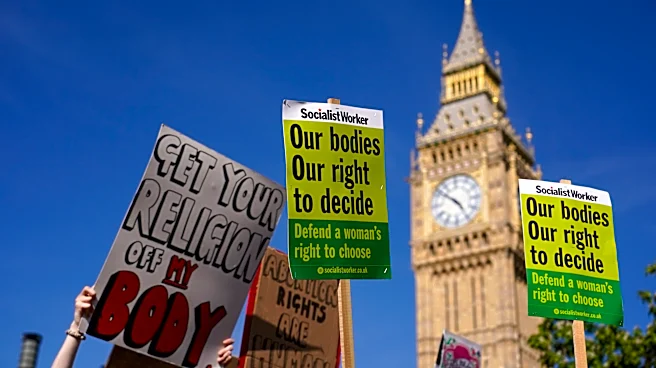
The British government announced that women previously convicted of illegally terminating pregnancies under a Victorian-era law will receive automatic pardons. This action follows Parliament's landmark vote last year to decriminalize abortion by repealing
a section of the 1861 Offences Against the Person Act. Women who received police cautions will also be pardoned, and details of arrests or investigations for ending pregnancies will be removed from their criminal records. These pardons will be issued automatically, with some even granted posthumously. Heidi Stewart, chief executive of the British Pregnancy Advisory Service, stated that while no pardon can undo past trauma, this change acknowledges the harm caused by criminalization and represents a step towards justice. Tonia Antoniazzi, a Labour Member of Parliament, noted that over 100 women were investigated for illegal abortions in the five years prior to last year's vote, including some who experienced natural miscarriages or stillbirths. The Crime and Policing Act, effective this spring, ensures women will not face criminal charges for terminating a pregnancy at any stage.
Why It's Important?
This decision marks a significant shift in how the UK addresses reproductive rights and past injustices. The automatic pardons aim to rectify historical wrongs, acknowledging the severe distress and trauma inflicted upon women under outdated laws. It underscores a broader societal movement towards decriminalizing abortion and recognizing a woman's autonomy over her body. For the affected women, this offers a chance to clear their names and potentially alleviate long-standing psychological burdens, enabling them to fully participate in society without the stigma of a criminal record. The move also highlights the impact of advocacy groups and lawmakers who pushed for these changes, demonstrating the power of sustained efforts to reform laws that are no longer aligned with modern ethical and medical standards. Anti-abortion groups, however, have expressed concerns that this measure could lead to abortion on demand at any stage of pregnancy, indicating ongoing societal divisions on the issue.
What's Next?
The automatic pardons are scheduled to be issued, with the government not requiring individual applications from affected women. This process will include posthumous pardons, ensuring that even those who are no longer alive receive recognition. The Crime and Policing Act, which took effect this spring, will continue to govern abortion laws, ensuring that women terminating pregnancies at any stage will not face criminal charges. This legislative framework allows doctors to legally perform abortions in England, Scotland, and Wales up to 24 weeks, with provisions for later abortions under specific circumstances, such as when the mother's life is at risk. The ongoing debate between abortion rights supporters and anti-abortion groups is likely to continue, with each side monitoring the implementation and effects of these new legal provisions. Future discussions may focus on the long-term societal impacts of decriminalization and the potential for further legislative adjustments.
Beyond the Headlines
The pardons extend beyond mere legal formality; they represent a profound ethical and cultural reckoning with past societal norms regarding women's reproductive health. The historical context of women being 'dragged from hospital beds to police cells' for suspected illegal abortions, even in cases of natural miscarriage, reveals a deeply punitive system that prioritized legal enforcement over compassionate care. This reform signals a shift towards a more empathetic legal framework, recognizing the vulnerability of women in such circumstances. The move also highlights the evolving understanding of what constitutes justice in cases where medical and personal decisions intersect with outdated laws. It sets a precedent for re-evaluating other historical laws that may have disproportionately harmed marginalized groups, prompting broader discussions about legal reform and restorative justice in the UK and potentially influencing similar debates internationally.