






What's Happening?
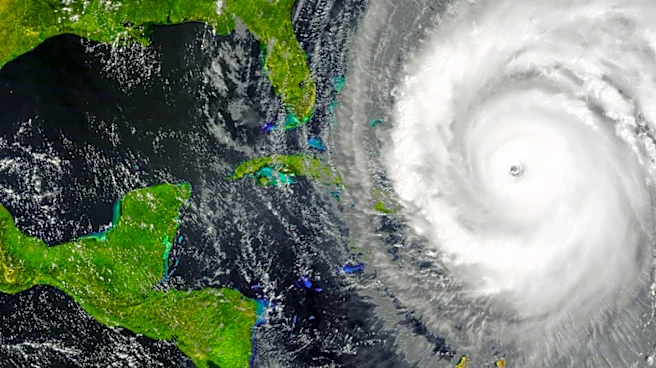
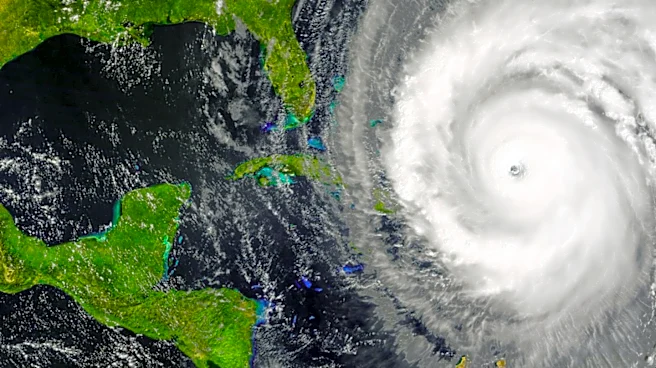
Researchers at Colorado State University (CSU) have updated their forecast for the 2026 Atlantic hurricane season, predicting it will be 'well below normal' due to a strengthening El Nino. The revised forecast anticipates nine named storms, four hurricanes,
and one major hurricane, a significant reduction from the average season, which typically sees about 14 named storms, seven hurricanes, and three major hurricanes. The first storm of the season, Tropical Storm Arthur, formed in June. The CSU team attributes the reduced hurricane activity to the high potential for a strong El Nino, a climate phenomenon known for producing vertical wind shear that inhibits hurricane formation. This update marks a decrease from CSU's original April forecast, which predicted 13 named storms, six hurricanes, and two major hurricanes.
Why It's Important?
The forecast of a below-normal hurricane season has significant implications for coastal communities, insurance companies, and disaster preparedness agencies. A quieter hurricane season could mean reduced risk of property damage and loss of life, potentially lowering insurance claims and costs associated with hurricane damage. For coastal regions, this forecast provides a reprieve from the usual heightened alertness and preparation required during more active seasons. However, it also underscores the unpredictability of climate phenomena like El Nino and their impact on weather patterns. The reduced likelihood of major hurricanes making landfall, estimated at 17% compared to the historical average of 43%, could influence economic activities and planning in vulnerable areas.
What's Next?
As the hurricane season progresses, stakeholders such as emergency management agencies, insurance companies, and coastal residents will continue to monitor updates from CSU and other meteorological organizations. The potential for a strong El Nino to dominate the tropical circulation during the peak of the hurricane season will be closely watched. This could lead to adjustments in preparedness strategies and resource allocation. Additionally, the forecast may influence policy discussions on climate adaptation and resilience, particularly in regions frequently impacted by hurricanes.