




What's Happening?
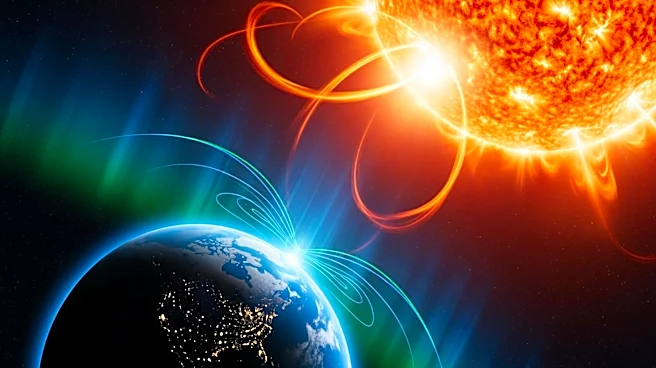
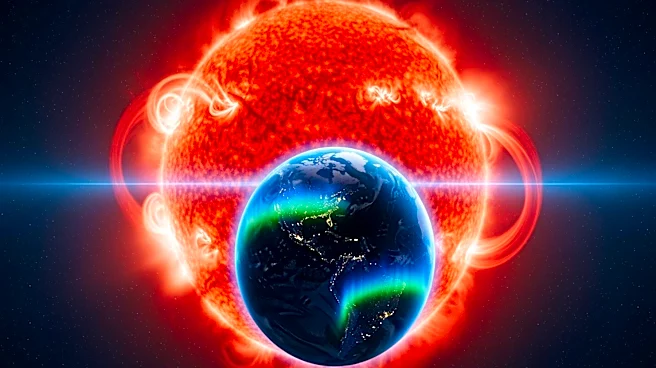
A 'cannibal' coronal mass ejection (CME) from a rare 'anti-Hale' sunspot is expected to hit Earth, potentially causing auroras visible across 23 U.S. states. This solar event began on June 2 from sunspot 4455, which has a reversed magnetic polarity compared
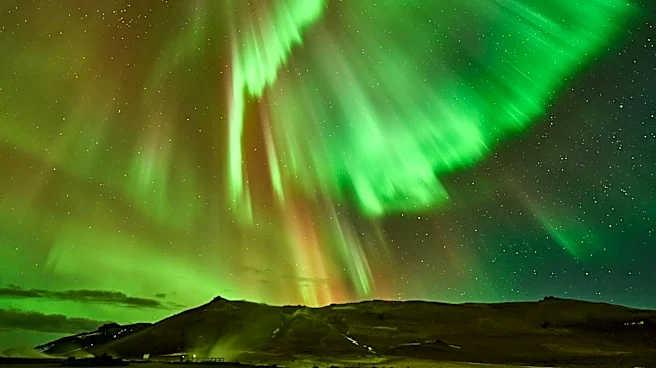
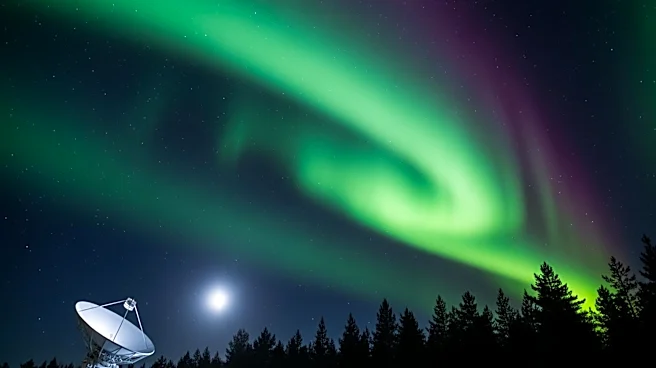
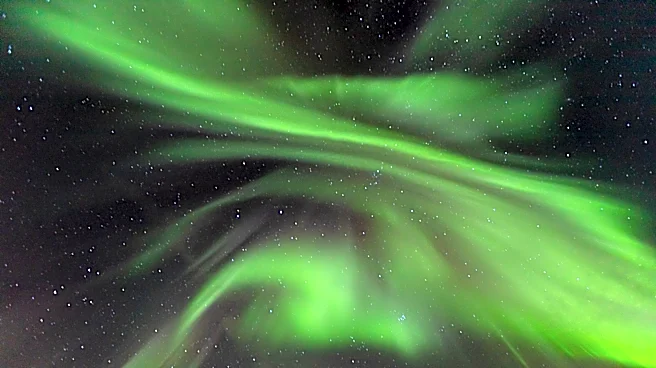
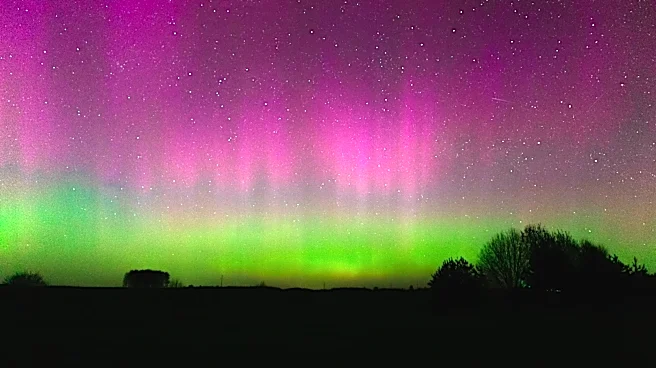
to other sunspots in its hemisphere. The CME, a large cloud of magnetized plasma, was created when a faster-moving CME overtook a slower one, forming a combined eruption. The National Oceanic and Atmospheric Administration (NOAA) predicts this will result in a strong geomagnetic storm, possibly reaching severe levels. The auroras may be visible in states including Washington, New York, and as far south as Illinois and Ohio.
Why It's Important?
The impact of this CME is significant as it highlights the potential for geomagnetic storms to disrupt Earth's magnetic field, affecting satellite operations, power grids, and communication systems. The visibility of auroras in areas not typically affected underscores the strength of this solar event. Understanding and predicting such solar activities are crucial for preparing and mitigating their effects on technology and infrastructure. This event also provides an opportunity for scientific study and public engagement with natural phenomena.
What's Next?
As the sunspot 4455 remains active, further solar flares and CMEs could occur, potentially leading to more geomagnetic storms. Scientists and agencies like NOAA will continue to monitor solar activity to provide timely warnings and updates. This ongoing observation is essential for protecting technological systems and ensuring public safety. Additionally, the current solar cycle, which is at its peak, suggests that similar events may become more frequent, necessitating continued vigilance and research.