




What's Happening?
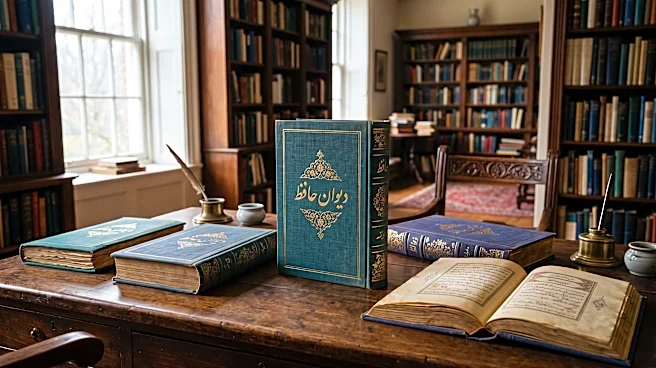
The literary and philosophical contributions of Allama Muhammad Iqbal were recently honored at an International Poetry Festival in Moscow, held in anticipation of his 149th birth anniversary. The event gathered diplomats, scholars, poets, and Russian
students to delve into Iqbal's enduring themes of selfhood, humanity, and intellectual awakening. Professor Vera Zabotkina, Vice-Rector, emphasized Iqbal's universal philosophy, which posits that genuine human progress necessitates both intellectual growth and moral fortitude. Pakistan's Ambassador to Russia, Faisal Niaz Tirmizi, lauded Iqbal as a visionary whose insights transcended his era, noting his extensive writings in Persian that reached a broad international audience. Mian Iqbal Salahuddin, Iqbal's grandson, elaborated on the poet's concept of revolution, describing it as the fundamental essence of life and a driving force for national advancement and survival. He stressed that Iqbal viewed revolution not merely as political upheaval but as a continuous journey of intellectual awakening, moral courage, and profound transformation. The festival underscored the global resonance of Iqbal's ideas, particularly his belief that nations must maintain a revolutionary spirit and adapt to change to avoid decline.
Why It's Important?
The celebration of Allama Iqbal's vision in Moscow highlights the enduring global relevance of philosophical and literary figures who advocate for intellectual and moral development. In an increasingly interconnected world, Iqbal's emphasis on selfhood, continuous intellectual awakening, and moral courage offers a framework for understanding societal progress beyond purely political or economic metrics. His philosophy, which transcends cultural and linguistic barriers, can foster cross-cultural dialogue and understanding, particularly between nations like Pakistan and Russia. The event also underscores the role of cultural diplomacy in strengthening international relations by showcasing shared intellectual heritage and universal human values. For scholars and students, engaging with Iqbal's work provides insights into the interplay between individual transformation and national destiny, encouraging a deeper reflection on the drivers of societal change and resilience. The recognition of his work in Russia demonstrates the universal appeal of ideas that champion human potential and the necessity of continuous evolution for both individuals and nations.
What's Next?
The continued celebration of Allama Iqbal's legacy, as demonstrated by the Moscow festival, suggests a sustained interest in his philosophical contributions on an international scale. Future events may include more academic conferences, literary readings, and cultural exchanges aimed at further exploring and disseminating his ideas. Educational institutions in various countries might integrate his works into their curricula, fostering a new generation of scholars and thinkers familiar with his perspectives on selfhood, revolution, and human progress. Diplomatic efforts could leverage such cultural figures to build stronger bilateral ties, using shared intellectual appreciation as a foundation for broader cooperation. Furthermore, the emphasis on intellectual awakening and moral courage in Iqbal's philosophy could inspire contemporary discussions on global challenges, prompting new approaches to issues of societal transformation and ethical leadership. The ongoing engagement with his vision is likely to reinforce the importance of intellectual and moral dimensions in addressing modern-day complexities.
Beyond the Headlines
Beyond the immediate celebration, the enduring appeal of Allama Iqbal's philosophy points to deeper societal needs for meaning and purpose in an era often characterized by rapid technological advancement and political flux. His concept of revolution as a continuous process of intellectual and moral transformation offers an alternative to purely material or political definitions of progress. This perspective encourages individuals and nations to look inward for strength and to prioritize ethical development alongside external achievements. The festival also subtly highlights the power of poetry and philosophy as tools for soft diplomacy, capable of bridging cultural divides and fostering mutual respect in ways that traditional political discourse often cannot. In a world grappling with identity crises and ideological conflicts, Iqbal's emphasis on selfhood and universal human values provides a unifying narrative. His work serves as a reminder that true societal advancement is rooted in the cultivation of individual character and a collective commitment to moral principles, offering a timeless blueprint for human flourishing that transcends geographical and historical boundaries.