








What's Happening?
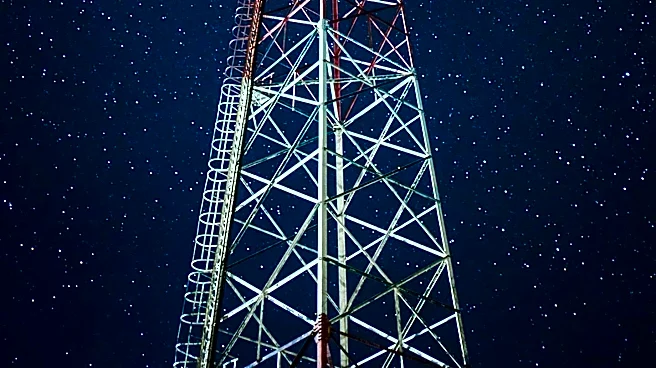
An experiment involving a hot dog and a 12,000-kilowatt AM radio tower in St. Charles, Missouri, conducted by radio engineer Joe Geerling and his son Jeff Geerling, has gone viral. The initial experiment, captured in a March 2024 YouTube video, showed
a hot dog wrapped in jumper cables and placed on the tower, which resulted in the hot dog burning and surprisingly broadcasting the radio station's signal at a loud volume. This unexpected phenomenon, where the hot dog acted as an audio speaker, captivated millions of viewers across YouTube, TikTok, and Instagram. Subsequent experiments with other materials like corn dogs and pickles also produced similar audio broadcasting effects, though none as effectively as the hot dog. The Geerlings, initially unsure of the exact mechanism, later explored the role of plasma in the phenomenon, with other YouTubers like Gavin Free of The Slow Mo Guys using specialized cameras to capture plasma arcs ripping chunks from the hot dog.
Why It's Important?
This viral experiment highlights the public's enduring fascination with technology, electricity, and scientific inquiry, even through unconventional means. The unexpected audio broadcasting from the hot dog sparked widespread curiosity, leading to millions of views and inspiring further investigation by other science communicators. It demonstrates how accessible and engaging scientific demonstrations, even those seemingly simple or humorous, can stimulate interest in complex physics concepts like radio frequencies, plasma, and electrical conductivity. For the scientific community, it presents an intriguing, albeit informal, case study on the interaction between organic matter and high-power radio waves. The collaborative nature of the online community, with comments and subsequent experiments contributing to understanding, showcases the power of collective curiosity in exploring unexplained phenomena. The experiment also underscores the significant energy present around radio towers and the potential dangers, even as it was conducted with safety precautions.
What's Next?
While the specific experiment at the St. Charles tower has concluded due to restricted access by the tower's owner, Jeff Geerling remains curious and is exploring opportunities for higher-power experiments with transmitter manufacturers. This indicates a potential shift towards more controlled and perhaps more scientifically rigorous investigations into the phenomenon. The viral nature of the original video may continue to inspire other amateur and professional scientists to conduct similar experiments, potentially leading to new insights or educational content. The initial mystery surrounding how the hot dog generated sound, and the subsequent exploration of plasma's role, suggests that further research could delve deeper into the electro-physical properties of organic materials under intense radio frequency exposure. The Geerlings' experience also serves as a testament to the impact of online content creators in popularizing scientific concepts and fostering a community of curious minds.
Beyond the Headlines
The 'talking hot dog' experiment transcends mere viral entertainment, touching upon deeper implications regarding scientific communication and public engagement. It exemplifies how unconventional and even humorous approaches can demystify complex scientific principles, making them accessible and exciting to a broad audience. The collaborative problem-solving that emerged from the online community, with viewers and other experts offering theories and conducting their own tests, showcases a form of citizen science driven by curiosity. Ethically, the experiment, while conducted with safety in mind, also subtly highlights the inherent dangers of high-power radio frequency environments, serving as an indirect cautionary tale about respecting such powerful forces. Culturally, it reinforces the idea that scientific discovery isn't confined to laboratories but can emerge from unexpected observations and playful experimentation, fostering a sense of wonder and encouraging critical thinking about the world around us.