








What's Happening?
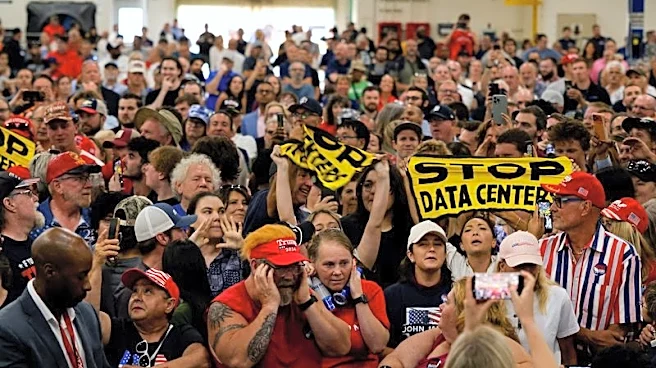
More than a quarter of Pennsylvania's 90 planned data center projects have been halted or delayed due to significant local opposition. Residents are expressing concerns over potential increases in electricity bills, water pollution, and the visual impact
of large facilities on the landscape. Data centers are known for their substantial electricity consumption for servers and cooling systems, and those using water cooling also demand large volumes of water. Additionally, residents are questioning the tax incentives offered to these projects, arguing that they create relatively few permanent jobs. The expansion of data center infrastructure has become a prominent campaign issue in the upcoming U.S. congressional midterm elections, particularly in the competitive 8th District. In response to growing concerns, Pennsylvania's Democratic Governor Josh Shapiro tightened rules for data center development in August, excluding AI projects from accelerated permitting programs, despite having welcomed $90 billion in energy and AI-related investments with President Trump in July 2025.
Why It's Important?
This development signifies a growing public backlash against the rapid expansion of data centers in the U.S., driven by environmental, economic, and quality-of-life concerns. The politicization of data center development, making it a key issue in congressional elections, indicates that local communities are increasingly vocal and organized in their opposition. This trend could lead to more stringent regulations and slower approval processes for data center projects nationwide, impacting the growth trajectory of the technology sector, particularly AI, which relies heavily on such infrastructure. For developers, it means increased costs, longer timelines, and the need for more robust community engagement strategies. For residents, it highlights a growing awareness of the environmental footprint of digital infrastructure and a demand for more sustainable and community-beneficial development.
What's Next?
The ongoing local opposition and its emergence as an election issue suggest that data center development will remain a contentious topic in Pennsylvania and potentially other states. Candidates in the upcoming midterm elections will likely need to articulate clear stances on data center projects to appeal to voters. Developers may face increased pressure to demonstrate tangible local benefits, such as job creation beyond construction, and to implement more environmentally friendly practices regarding energy and water consumption. State and local governments might continue to revise regulations, potentially imposing stricter environmental standards, higher fees, or reduced tax incentives for data center projects. This could lead to a shift in where data centers are built, favoring locations with less community resistance or more abundant resources.
Beyond the Headlines
The resistance to data centers reflects a broader societal reckoning with the hidden costs of the digital age. While technology offers convenience and economic growth, the physical infrastructure supporting it—like data centers—has significant environmental demands. This situation highlights a tension between technological advancement and local environmental stewardship. It also underscores a growing skepticism among the public regarding corporate tax incentives, especially when the perceived local benefits (like job creation) are minimal. The convergence of environmental concerns, economic skepticism, and political activism around data centers could signal a new era where communities demand a greater say in infrastructure development, pushing for more equitable distribution of benefits and burdens associated with technological progress. This could also spur innovation in more energy-efficient and water-saving data center technologies.