
What's Happening?
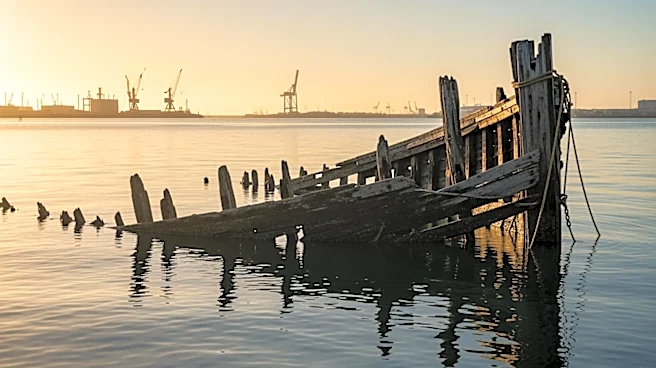
The Port of Itajaí in Brazil has embarked on a significant project to remove the wreck of the merchant ship Pallas, which has been submerged in a critical shipping channel for over 130 years. This initiative
is part of a broader modernization effort aimed at deepening the channel to accommodate larger vessels. The Pallas, a ship built in England in 1891 and incorporated into the Brazilian fleet the same year, was scuttled in 1893 during the Federalist Revolution to prevent its capture by rebels. The wreck has since obstructed access to the port, limiting its operational capacity. The removal is expected to facilitate safe maneuvers, increase productivity, and reduce logistics costs, thereby strengthening the port's competitiveness. The project, which includes dredging and other infrastructure improvements, is financed by the federal government at a cost of $158.8 million.
Why It's Important?
The removal of the Pallas wreck is crucial for the Port of Itajaí, Brazil's second-largest container port, as it seeks to expand its operational capacity to handle larger vessels. This expansion is vital for maintaining the port's competitiveness in the global shipping industry, especially as modern ships continue to increase in size. By deepening the channel from 14 to 16 meters, the port aims to accommodate the growing demands of international trade, which is essential for economic growth and development in the region. The project also underscores the importance of maintaining efficient and safe maritime operations, which are critical for global supply chains and economic stability.
What's Next?
The Port of Itajaí will continue with its modernization project, which includes not only the removal of the Pallas wreck but also the dredging of the channel, reconfiguration of the Navegantes jetty, and construction of a new pier for cruise ships. These efforts are expected to be completed over the next four years, significantly enhancing the port's capacity and operational efficiency. The successful completion of this project could serve as a model for other ports facing similar challenges, highlighting the importance of infrastructure investment in maintaining competitive and efficient maritime operations.