





What's Happening?
NASA is recruiting four volunteers to participate in a yearlong mission simulating a trip to Mars, conducted at the Johnson Space Center in Houston. This mission, known as the Moon and Mars Exploration Analog, aims to study the effects of extended deep-space
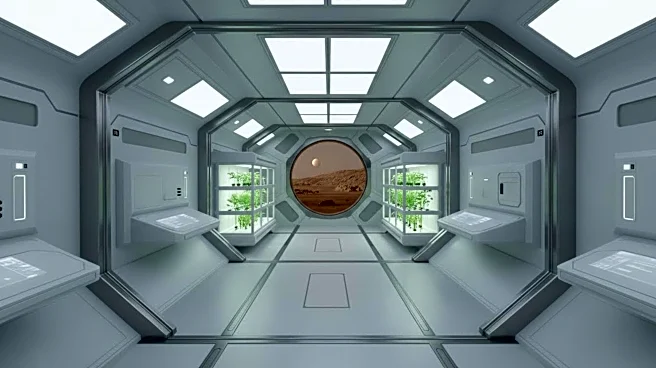
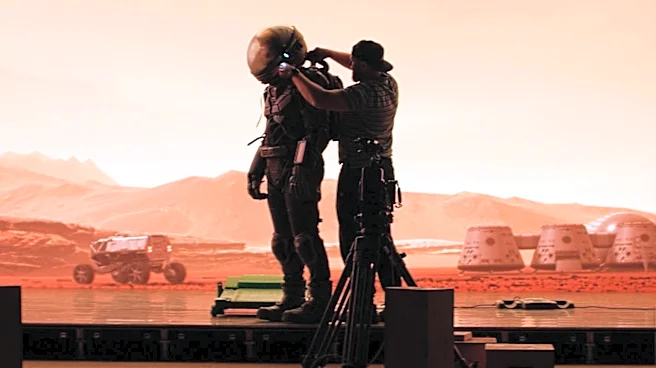
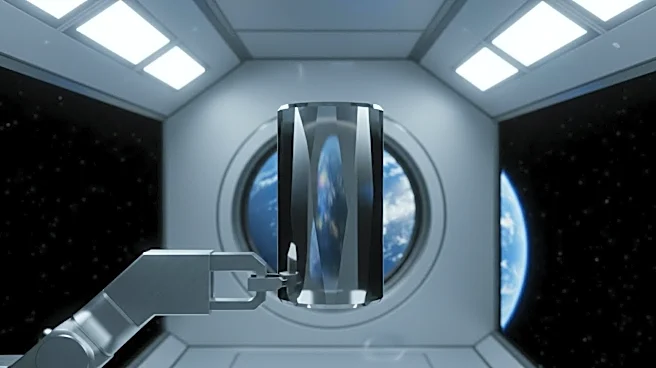
travel on the human body and mind. Participants will live in two connected habitats, simulating both the transit and surface operations of a Mars mission. The first habitat, a modified HERA structure, will mimic the spacecraft environment, while the second, a 3D-printed surface habitat, will simulate living conditions on Mars. The mission is set to begin no earlier than August 2027.
Why It's Important?
This mission is crucial for NASA's preparation for future manned missions to Mars and the Moon. By understanding the psychological and physical challenges of long-duration space travel, NASA can develop better life support systems, work schedules, and mental health protocols. The data collected will also inform the design of communication systems for high-latency environments and food production methods for missions where resupply from Earth is not feasible. This research is vital for ensuring the safety and effectiveness of astronauts on future interplanetary missions.
What's Next?
NASA will continue to accept applications for this mission, with a selection process that includes physical and psychological assessments. The chosen volunteers will undergo two months of pre-mission training before the yearlong simulation begins. The findings from this mission will contribute to NASA's Human Research Program and the Artemis program, which aims to establish a sustainable human presence on the Moon.